Categories
Dive Deeper
Page Stats
Navigation
Categories
Dive Deeper
Page Stats
Complete Details
All information about this creature
Overview
Glowing Luna Moth
Unique fluorescent insect, adored by religious humans.
Insect
Looks
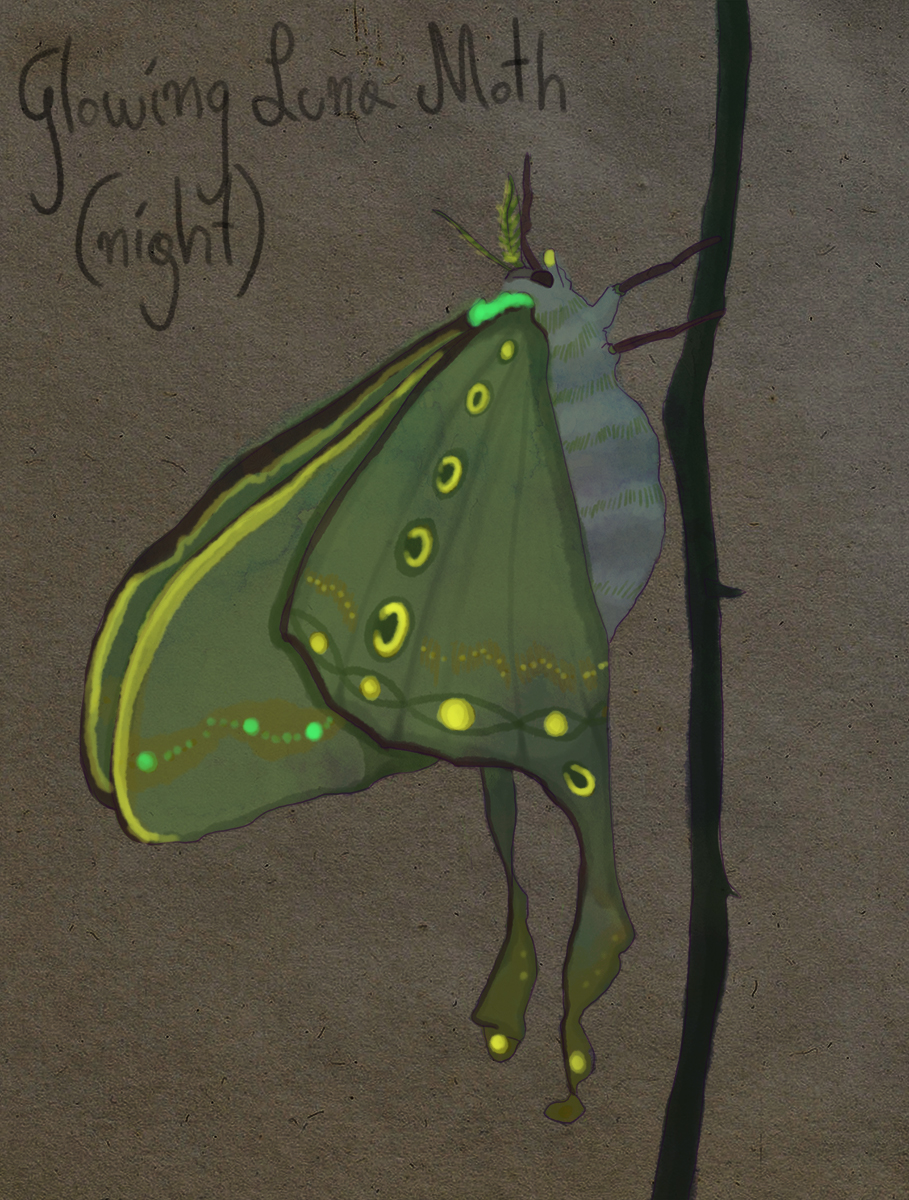
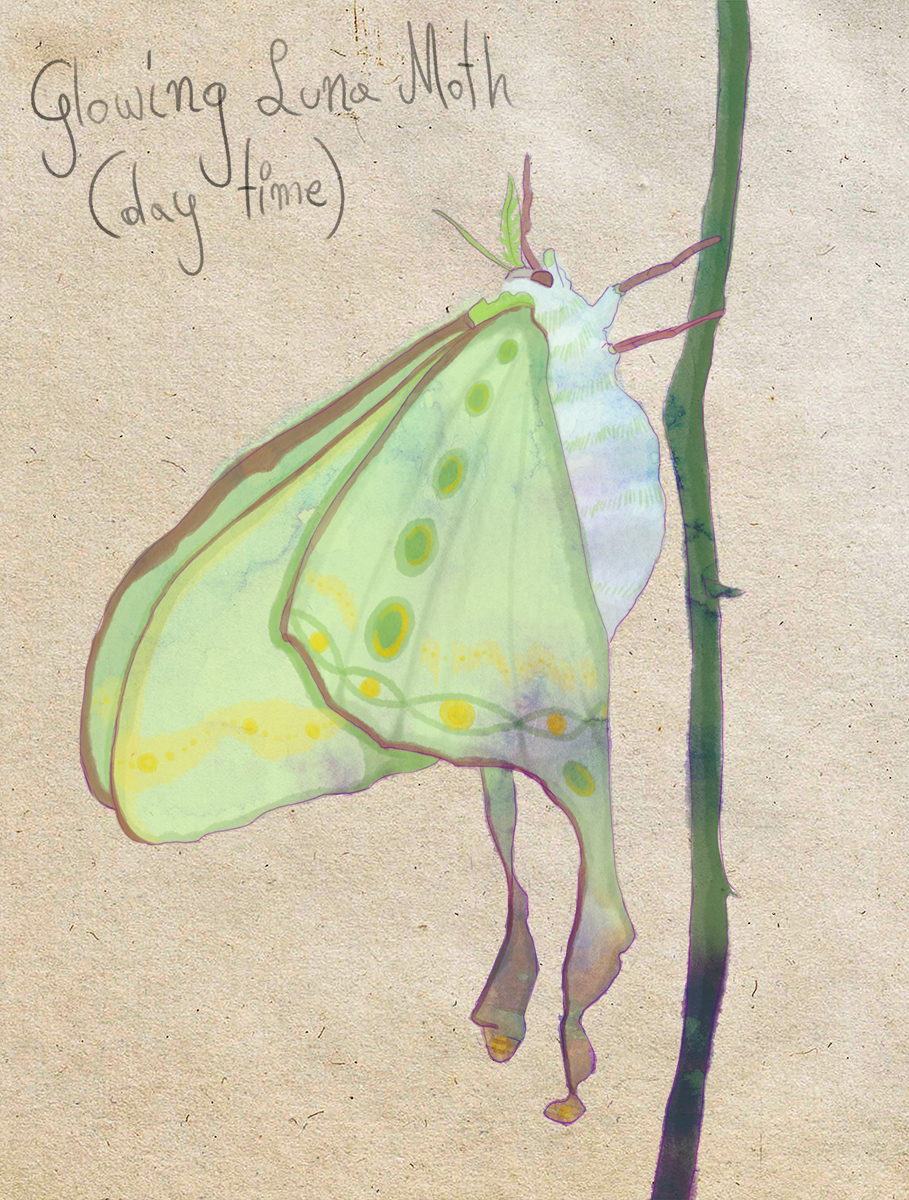
Females and males are similar in size and appearance: green wings, eyespots on both forewings and hind wings, and long, sometimes somewhat twisted tails extending from the back edge of the hindwings. Bodies are white and hairy. The forward edge of the forewing is dark-colored and thick, tapering in thickness from the thorax to the wing tip. Its color can range from maroon to brown. The "eye" pattern on foreings are oval in shape, with a round "pupil" inside. The "eyes" are thought to confuse potential predators.
Typically, it has a wingspan of roughly 120 mm (4.5 in), but can exceed 190 mm (7.0 in), making it one of the larger moths on the continent.
Habitat
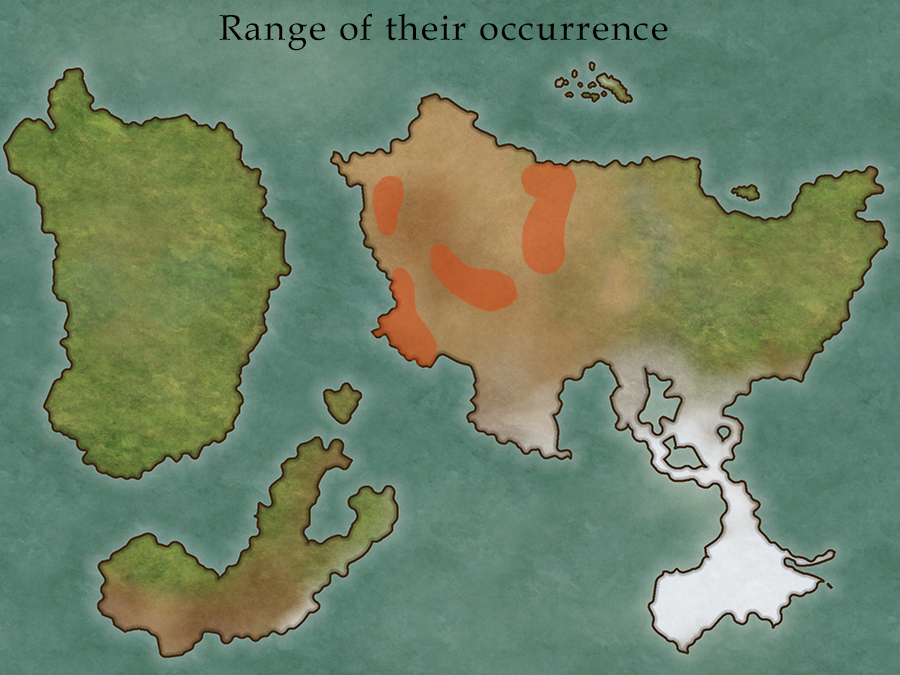
Just like Lunar Civets, Glowing Moths live in warm climate, near bodies of water.
Glowing Moths seem to migrate in groups of 100-200 individuals between different osases and civet's territories. They travel only between midnight and 4 am. They tend to be very careful and slow to travel bigger distances, because being caught by the sun in the middle of desert is a inevitable death for whole flock.
Larvae and cocoons are usually concentrated in one spot, in the middle/top parts of water grasses. Once they turn into adult moths, they tend to use Lunar Civet's back as a "landmark" and meeting spot.
Most insect eating animals; the biggest danger for them are hawks, owls, ferrets, fish and... humans, who are using cocoons to create silk and consider larvae to be a delicacy.
They feast on small other small insects and parasites living in civet's fur, sometimes they participate in consuming bigger, already dead/decaying creatures
-copied from Lunar Civet's page - "Lunar Civets are mostly known for their symbiosis relationship with Glowing Luna Moths, which resulted in them both becoming the symbol of Godess of Night and Destiny.
In natural habitat, Lunar Civets spend most of their nights walking around, carrying mentioned moths on their back. While Glowing Moths are keeping civet's healthy by feasting on flees and other parasites living in their fur, what moths are getting in return is protection from predators, easier way to migrate and find each other. They are also the ones that benefit from civet's death, as they are first to devour it's flesh, getting all the sodium they need to survive.
Religious humans believe that a sight of Lunar civet (no matter if alive or dead) accompanied by Glowing Moths is a sign of holy presence and making of a good decision."
Comparisons
Other types of moths and butterflies, mostly other silk-creating species
On their own they symbolise peace and fortune; in the company of Lunar Civet they are a sign of gods presence and approval of your decisions and lifestyle.
Classification
Anthropoda
Insecta
Lepidoptera
Saturniidae
Actias
Actias Luna Nitereris
Overview
Details about this creature's overview
Glowing Luna Moth
Unique fluorescent insect, adored by religious humans.
Insect
Looks
Details about this creature's looks
Females and males are similar in size and appearance: green wings, eyespots on both forewings and hind wings, and long, sometimes somewhat twisted tails extending from the back edge of the hindwings. Bodies are white and hairy. The forward edge of the forewing is dark-colored and thick, tapering in thickness from the thorax to the wing tip. Its color can range from maroon to brown. The "eye" pattern on foreings are oval in shape, with a round "pupil" inside. The "eyes" are thought to confuse potential predators.
Typically, it has a wingspan of roughly 120 mm (4.5 in), but can exceed 190 mm (7.0 in), making it one of the larger moths on the continent.
Traits
Details about this creature's traits
No traits information yet
This section doesn't have any information filled in yet.
Habitat
Details about this creature's habitat
Just like Lunar Civets, Glowing Moths live in warm climate, near bodies of water.
Glowing Moths seem to migrate in groups of 100-200 individuals between different osases and civet's territories. They travel only between midnight and 4 am. They tend to be very careful and slow to travel bigger distances, because being caught by the sun in the middle of desert is a inevitable death for whole flock.
Larvae and cocoons are usually concentrated in one spot, in the middle/top parts of water grasses. Once they turn into adult moths, they tend to use Lunar Civet's back as a "landmark" and meeting spot.
Most insect eating animals; the biggest danger for them are hawks, owls, ferrets, fish and... humans, who are using cocoons to create silk and consider larvae to be a delicacy.
They feast on small other small insects and parasites living in civet's fur, sometimes they participate in consuming bigger, already dead/decaying creatures
-copied from Lunar Civet's page - "Lunar Civets are mostly known for their symbiosis relationship with Glowing Luna Moths, which resulted in them both becoming the symbol of Godess of Night and Destiny.
In natural habitat, Lunar Civets spend most of their nights walking around, carrying mentioned moths on their back. While Glowing Moths are keeping civet's healthy by feasting on flees and other parasites living in their fur, what moths are getting in return is protection from predators, easier way to migrate and find each other. They are also the ones that benefit from civet's death, as they are first to devour it's flesh, getting all the sodium they need to survive.
Religious humans believe that a sight of Lunar civet (no matter if alive or dead) accompanied by Glowing Moths is a sign of holy presence and making of a good decision."
Comparisons
Details about this creature's comparisons
Other types of moths and butterflies, mostly other silk-creating species
On their own they symbolise peace and fortune; in the company of Lunar Civet they are a sign of gods presence and approval of your decisions and lifestyle.
Evolution
Details about this creature's evolution
No evolution information yet
This section doesn't have any information filled in yet.
Reproduction
Details about this creature's reproduction
No reproduction information yet
This section doesn't have any information filled in yet.
Classification
Details about this creature's classification
Anthropoda
Insecta
Lepidoptera
Saturniidae
Actias
Actias Luna Nitereris
Notes
Details about this creature's notes
No notes information yet
This section doesn't have any information filled in yet.
Gallery
Images and visual content for this creature
Associations
Other pages that reference or connect to this creature
Referenced By
3Collections
Published collections that feature this creature
Not in any collections yet
This creature hasn't been published in any collections yet. Collections are curated groups of related content that help organize and showcase your world.
Tip: Collections are a great way to group related content together and share themed stories or worldbuilding elements with others.
Timelines
Timelines that reference or include this creature
No timeline connections yet
This creature isn't connected to any timelines yet. Timelines help organize events chronologically and show how your content fits into the broader history of your world.
Tip: Create timelines to organize important events in your world's history. Link characters, locations, and other content to specific events to build rich, interconnected narratives.
Shares
Discussion about this creature
No shares yet
Be the first to start a discussion about this creature by sharing it to the community stream.
Privacy & Sharing
Manage who can see and access this creature
Current Status
refresh
This creature is currently
Privacy Settings
Choose who can see and access this creature
language Universe Privacy
This page belongs to a universe with its own privacy settings