
Categories
Dive Deeper
Page Stats
Navigation
Categories
Dive Deeper
Page Stats
Complete Details
All information about this creature
Overview
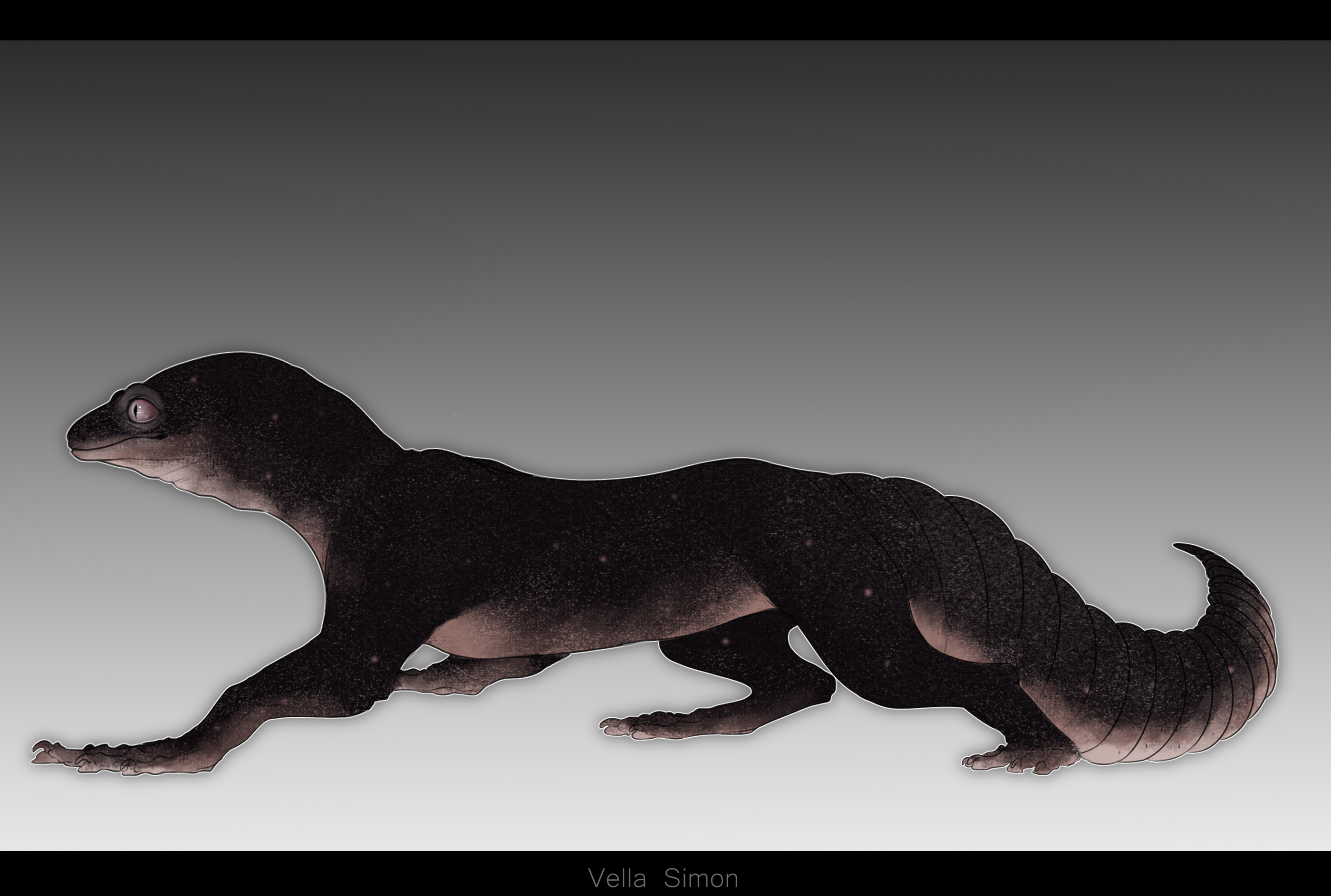
Baggrok Lizard
Reptilian
Looks
Various undertones of black, gray, brown, and orange with thick, fleshy, pebble-like hide.
Lizard
In comparison to most medium-large size dog breeds.
15-27 in from shoulder to ground.
100-115lbs.
Fatty tail
Large eyes.
Sharp claws.
Leather
Meat
Traits
Wild Baggrok Lizards tend to be very feral and harder to tame compared to their domesticated counterparts.
They tend to attack swiftly and have a higher preference for ambush attacks by either hiding in the sands or hiding above upon trees and cliffsides to pounce.
Their tails can be severed free and used as a distraction while they escape which the grow back months later.
Colder environments are often life threatening for this species and require controlled areas where heat in is in abundance.
Moisture is also a conflicting aspect. Although they enjoy settling in water or licking the dew from their bodies, prolonged interaction with water tends to soften and weaken their leathery hide to where they make become susceptible to parasites, bacteria, and infections.
Growls
Chirps
Clicks
Barks
Meat - Most of the meat of a Baggrok is tough, gamey, and only good for stews or jerky if one knows the process of tenderizing them. Their tails are thick, fatty and meaty with similarities to chicken though. Often considered a delicacy, Baggrok Lizard Tails are favored greatly and the meat is known to be sweet and savory if prepared properly.
Hide - The thick skin of Baggrok Lizards are commonly sought after due to the hard leather being durable, versatile, and appealing. Armor can be designed from it as can belts, boots, and gloves as trendy accessories.
Eyes - It's said that the eyes of Baggrok Lizards can be dried and ground up into a powder or melted down into a paste like substance that heals and eases the pains of sunburns, and burn wounds in general. Many desert dwelling nomads pay a hefty sum for the eyes of these large reptiles.
Sense of smell and hearing are its strongest factors.
Although their eyes are big, their depth perception and struggle with seeing during daylight hours makes if hard for Baggrok Lizards to rely on sight when moving or hunting.
Habitat
Deserts (Rocky cliffsides)
Open plains & dunes
Hunting and scavenging
Insects
Small mammals
Small birds
Occasionally livestock
Overview
Details about this creature's overview
Baggrok Lizard
Reptilian
Looks
Details about this creature's looks
Various undertones of black, gray, brown, and orange with thick, fleshy, pebble-like hide.
Lizard
In comparison to most medium-large size dog breeds.
15-27 in from shoulder to ground.
100-115lbs.
Fatty tail
Large eyes.
Sharp claws.
Leather
Meat
Traits
Details about this creature's traits
Wild Baggrok Lizards tend to be very feral and harder to tame compared to their domesticated counterparts.
They tend to attack swiftly and have a higher preference for ambush attacks by either hiding in the sands or hiding above upon trees and cliffsides to pounce.
Their tails can be severed free and used as a distraction while they escape which the grow back months later.
Colder environments are often life threatening for this species and require controlled areas where heat in is in abundance.
Moisture is also a conflicting aspect. Although they enjoy settling in water or licking the dew from their bodies, prolonged interaction with water tends to soften and weaken their leathery hide to where they make become susceptible to parasites, bacteria, and infections.
Growls
Chirps
Clicks
Barks
Meat - Most of the meat of a Baggrok is tough, gamey, and only good for stews or jerky if one knows the process of tenderizing them. Their tails are thick, fatty and meaty with similarities to chicken though. Often considered a delicacy, Baggrok Lizard Tails are favored greatly and the meat is known to be sweet and savory if prepared properly.
Hide - The thick skin of Baggrok Lizards are commonly sought after due to the hard leather being durable, versatile, and appealing. Armor can be designed from it as can belts, boots, and gloves as trendy accessories.
Eyes - It's said that the eyes of Baggrok Lizards can be dried and ground up into a powder or melted down into a paste like substance that heals and eases the pains of sunburns, and burn wounds in general. Many desert dwelling nomads pay a hefty sum for the eyes of these large reptiles.
Sense of smell and hearing are its strongest factors.
Although their eyes are big, their depth perception and struggle with seeing during daylight hours makes if hard for Baggrok Lizards to rely on sight when moving or hunting.
Habitat
Details about this creature's habitat
Deserts (Rocky cliffsides)
Open plains & dunes
Hunting and scavenging
Insects
Small mammals
Small birds
Occasionally livestock
Comparisons
Details about this creature's comparisons
No comparisons information yet
This section doesn't have any information filled in yet.
evolution
Details about this creature's evolution
No evolution information yet
This section doesn't have any information filled in yet.
Reproduction
Details about this creature's reproduction
No reproduction information yet
This section doesn't have any information filled in yet.
Classification
Details about this creature's classification
No classification information yet
This section doesn't have any information filled in yet.
Notes
Details about this creature's notes
No notes information yet
This section doesn't have any information filled in yet.
Gallery
Images and visual content for this creature
Associations
Other pages that reference or connect to this creature
No connections yet
Start building your world by linking this creature to other pages
Collections
Published collections that feature this creature
Not in any collections yet
This creature hasn't been published in any collections yet. Collections are curated groups of related content that help organize and showcase your world.
Tip: Collections are a great way to group related content together and share themed stories or worldbuilding elements with others.
Timelines
Timelines that reference or include this creature
No timeline connections yet
This creature isn't connected to any timelines yet. Timelines help organize events chronologically and show how your content fits into the broader history of your world.
Tip: Create timelines to organize important events in your world's history. Link characters, locations, and other content to specific events to build rich, interconnected narratives.
Shares
Discussion about this creature
No shares yet
Be the first to start a discussion about this creature by sharing it to the community stream.
Privacy & Sharing
Manage who can see and access this creature
Current Status
refresh
This creature is currently
Privacy Settings
Choose who can see and access this creature
language Universe Privacy
This page belongs to a universe with its own privacy settings