Categories
Dive Deeper
Page Stats
Navigation
Categories
Dive Deeper
Page Stats
Complete Details
All information about this planet
Overview
Geography
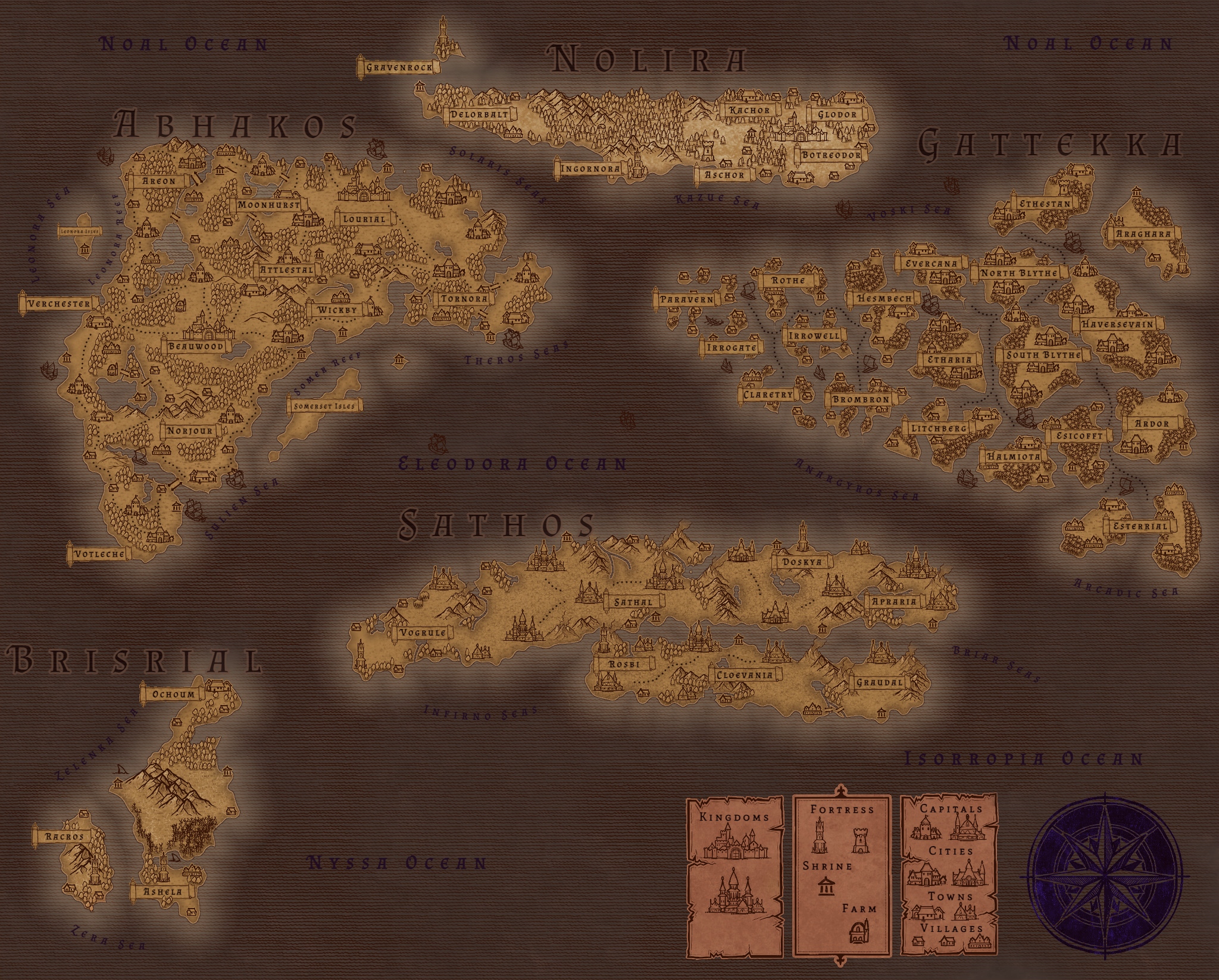
There are four oceans: the Isorropia Ocean, the Eleodora Ocean, the Noal Ocean, and the Nyssa Ocean (listed from largest to smallest).
Mozora is the largest planet in the solar system, with a radius of 52,934 miles.
Climate
There are ultimately four main seasons that dominate Mozora. However, based on location, there can be as little as two or as many as eight.
Time
There are 12 months, all 30 days, which make a completed year consist of 360 days.
Mozora's night cycle is about 12 hours, but easily varies depending on location and seasonal changes.
Mozora's day cycle is about 12 hours, but easily varies depending on location and seasonal changes.
Inhabitants
Immense populations of varying types of blood, soul, and vessel.
Astral
Mozora has two blue suns that it orbits.
Ausra is a light royal blue, named after the idea of dawn. This sun cycle is mostly known for the commemoration of life and new opportunities.
Asra is a dark blue violet, named after the idea of dusk. This sun cycle is mostly known for the commemoration of death and closing doors.
Mozora has three red moons that orbit it.
The smallest moon, Ulderia, a burgundy red. Full and new moons of Ulderia are said to bring energies or "blessings" regarding self, health, and wealth.
Nemern, a light coral red. New moons of Nemern are said to bring creativity and warmth.
The largest moon, Autio, a scarlet red, better known as the Blood Moon. Full moons of Autio are said to bring energies regarding strength and passion.
Mozora orbits around its two suns in a figure 8. A completed orbit on Mozora is formally 720 days, or two years.
One full cycle around one of the suns results in the completion of one year, and the beginning of a new year and sun cycle.
However, a completed orbit is normally celebrated more often than the completed year because of its colloquial connection with Dualism: Life and Death, Order and Chaos.
Overview
Details about this planet's overview
Geography
Details about this planet's geography
There are four oceans: the Isorropia Ocean, the Eleodora Ocean, the Noal Ocean, and the Nyssa Ocean (listed from largest to smallest).
Mozora is the largest planet in the solar system, with a radius of 52,934 miles.
Climate
Details about this planet's climate
There are ultimately four main seasons that dominate Mozora. However, based on location, there can be as little as two or as many as eight.
Time
Details about this planet's time
There are 12 months, all 30 days, which make a completed year consist of 360 days.
Mozora's night cycle is about 12 hours, but easily varies depending on location and seasonal changes.
Mozora's day cycle is about 12 hours, but easily varies depending on location and seasonal changes.
Inhabitants
Details about this planet's inhabitants
Immense populations of varying types of blood, soul, and vessel.
Astral
Details about this planet's astral
Mozora has two blue suns that it orbits.
Ausra is a light royal blue, named after the idea of dawn. This sun cycle is mostly known for the commemoration of life and new opportunities.
Asra is a dark blue violet, named after the idea of dusk. This sun cycle is mostly known for the commemoration of death and closing doors.
Mozora has three red moons that orbit it.
The smallest moon, Ulderia, a burgundy red. Full and new moons of Ulderia are said to bring energies or "blessings" regarding self, health, and wealth.
Nemern, a light coral red. New moons of Nemern are said to bring creativity and warmth.
The largest moon, Autio, a scarlet red, better known as the Blood Moon. Full moons of Autio are said to bring energies regarding strength and passion.
Mozora orbits around its two suns in a figure 8. A completed orbit on Mozora is formally 720 days, or two years.
One full cycle around one of the suns results in the completion of one year, and the beginning of a new year and sun cycle.
However, a completed orbit is normally celebrated more often than the completed year because of its colloquial connection with Dualism: Life and Death, Order and Chaos.
History
Details about this planet's history
No history information yet
This section doesn't have any information filled in yet.
Changelog
Details about this planet's changelog
No changelog information yet
This section doesn't have any information filled in yet.
Notes
Details about this planet's notes
No notes information yet
This section doesn't have any information filled in yet.
Gallery
Images and visual content for this planet
Associations
Other pages that reference or connect to this planet
Referenced By
50Nolira
Planet
Sathos
Planet
Abhakos
Planet
Gattekka
Planet
Brisrial
Planet
Haversevain
Planet
Areon
Planet
Moonhurst
Planet
Lourial
Planet
Attlestal
Planet
Verchester
Planet
Beauwood
Planet
Wickby
Planet
Tornora
Planet
Votleche
Planet
Norjour
Planet
Paravern
Planet
Rothe
Planet
Irrogate
Planet
Irrowell
Planet
Claretry
Planet
Brombron
Planet
Litchberg
Planet
Halmiota
Planet
Esterrial
Planet
Hesmbech
Planet
Evercana
Planet
Etharia
Planet
North Blythe
Planet
South Blythe
Planet
Ethestan
Planet
Ardor
Planet
Araghara
Planet
Esicofft
Planet
Noal Ocean
Located at
Eleodora Ocean
Planet
Isorropia Ocean
Planet
Noal Ocean
Planet
Nyssa Ocean
Planet
Solaris Seas
Planet
Leonora Sea
Planet
Sulien Sea
Planet
Theros Seas
Planet
Infirno Seas
Planet
Briar Seas
Planet
Arcadic Sea
Planet
Voski Sea
Planet
Anargyros Sea
Planet
Kazue Sea
Planet
Zelenka Sea
Planet
Collections
Published collections that feature this planet
Not in any collections yet
This planet hasn't been published in any collections yet. Collections are curated groups of related content that help organize and showcase your world.
Tip: Collections are a great way to group related content together and share themed stories or worldbuilding elements with others.
Timelines
Timelines that reference or include this planet
No timeline connections yet
This planet isn't connected to any timelines yet. Timelines help organize events chronologically and show how your content fits into the broader history of your world.
Tip: Create timelines to organize important events in your world's history. Link characters, locations, and other content to specific events to build rich, interconnected narratives.
Shares
Discussion about this planet
No shares yet
Be the first to start a discussion about this planet by sharing it to the community stream.
Privacy & Sharing
Manage who can see and access this planet
Current Status
refresh
This planet is currently
Privacy Settings
Choose who can see and access this planet
language Universe Privacy
This page belongs to a universe with its own privacy settings