
Categories
Page Stats
Navigation
Categories
Page Stats
Complete Details
All information about this religion
Overview
Southern Seapraise
The religion of Arlandians, praising Fen- the being that manifests in the Sea.
Seapraise, Fenism
History
The ancient tribes of Arlandia used to worship various deities of nature, with Fen- the Sea, being the most powerful one. Eventually, he became the sole god, and the other deities merely spirits under his reign.
Beliefs
Seapraisers put great emphasis on paying proper respect to their god. Different than Northern Seapraisers, they don't believe Fen is the god of the sea, merely that they manifest in it.
Aesthetic and beauty is highly esteemed in Seapraise, and different than the Northern Fennism, the Southern faith doesn't believe minimalism is better, since they deem Fen to be a curious being craving new experiences.
-
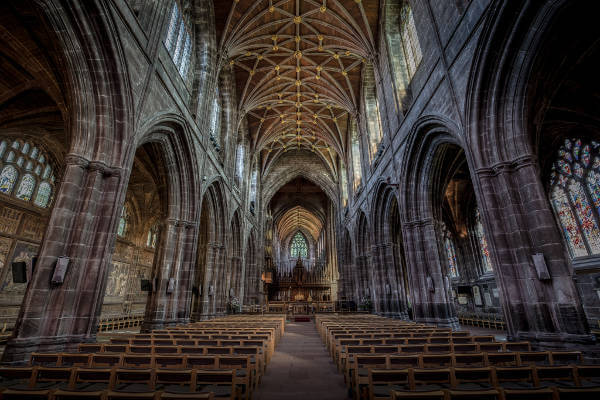
Different than Northern Seapraise, Southern Seapraise only uses churches as places of worship. They double serve as convents. Mostly, they are proportionally narrow rectangular buildings, with a round hall in the middle, the one containing the altar. From this hall, four doors lead to four triangular staircases, filling in the circle into a rectangle. Two of those staircases are leading up, and two down- below the ground level. The upper floor and basement are where the convent activities are conducted, and these can be arranged differently.
There are no cementeries, since funerals didn't ever take place in Arlandia because of limited space. Instead, dead bodies were cremated or a subject to ritualistic cannibalism.
On every monday, there is a gathering, which has a more organized mass structure- its led by a monk or a nun and there's singing and community prayer. On every full moon, there's a big gathering beggining at moonrise and ending at sunrise, which still has a pretty organized structure, different than the ones in Northern Praise.
There are also weddings, obviously. Newborn children are presented to the sea- basically just a small party is thrown at a beach. If a family does not live near a sea, it can be done near a river (which flows into the sea), or in the presence of a live roe deer. However, most families just drive to the sea, since the island is relatively small, so it usually is not a big expense. There are no funerals, and every family is supposed to deal with their dead on their own.
Seapraisers are supposed to devote their lifes to create- arts, crafts, engineering, agriculture all are deemed as valuable.
Since Fen is thought to manifest as sea, they often carry small bottles of sea water, always in a visible place: Fen, being thought to be a curious and explorer-like being, is thought to derive pleasure from being allowed to experience multiple lives.
Their prayer is usually in the morning, just after waking up. They aren't allowed to salt their food.
Tea, traditionally made from blooming heathers, is sacred since they supposedly bloom when the souls of the dead leave them. Southern Fenists actually start to abandon the typical way of eating it like soup with a spoon, but still are not allowed to mix it with anything, and only ever drink it on spiritual occassions.
A more secular tradition is the black ribbon band- worn on the left ankle by children , on the left wrist by non-married people, on the right wrist by those married, and on the neck by widows. Thus, chokers are kind of frowned upon in Arlandia. Additionally, people looking for a relationship tie the ribbon on their left wrist into a flat knot facing up, those currently in a relationship into a bow, and those not looking for a relationship into a flat knot facing down.
Furthermore, there are four categories of monks and nuns in Southern Seapraise: Akarissa, those devoting themselves to community service, wear the band on their right palm. Branassa, devoted to specifically teaching children and nursing at hospitals wear the band on their left palm. Sekolarassa- the preachers, wear the band on their foreheads. Finally, Asolitassa, those devoting themselves to solitary prayer and contemplation wear it around their eyes-permanently. They're not allowed to take it down.
Seapraisers in general don't believe in paradise. Instead, they believe in reincarnation with extra steps: first, the souls of the dead are reborn into heathers to atone for their sins. The moment the plants bloom, the souls have left to be reincarnated as animals, plants or people.
Traditions
The newborn children are presented to the sea. Then, they usually attend religious education at a local church and at home. They have a "heather wedding" usually when they're about fourteen, sometimes older or younger. It's an important ceremony on which they wear white (traditional grief color) and heather crowns and necklaces, and during which they are "wed" to the Sea and promise to serve it. It's however not required for initiation and many people choose not to do it.
When heathers bloom, a huge festiwal is issued: filled with food, light and dance to celebrate the reincarnation of souls. This festiwal lasts a week. Another big holiday is the first full moon of the year: that holiday lasts three days and is more spiritual than the Heather Festival.
Spread
Overview
Details about this religion's overview
Southern Seapraise
The religion of Arlandians, praising Fen- the being that manifests in the Sea.
Seapraise, Fenism
History
Details about this religion's history
The ancient tribes of Arlandia used to worship various deities of nature, with Fen- the Sea, being the most powerful one. Eventually, he became the sole god, and the other deities merely spirits under his reign.
Beliefs
Details about this religion's beliefs
Seapraisers put great emphasis on paying proper respect to their god. Different than Northern Seapraisers, they don't believe Fen is the god of the sea, merely that they manifest in it.
Aesthetic and beauty is highly esteemed in Seapraise, and different than the Northern Fennism, the Southern faith doesn't believe minimalism is better, since they deem Fen to be a curious being craving new experiences.
-
Different than Northern Seapraise, Southern Seapraise only uses churches as places of worship. They double serve as convents. Mostly, they are proportionally narrow rectangular buildings, with a round hall in the middle, the one containing the altar. From this hall, four doors lead to four triangular staircases, filling in the circle into a rectangle. Two of those staircases are leading up, and two down- below the ground level. The upper floor and basement are where the convent activities are conducted, and these can be arranged differently.
There are no cementeries, since funerals didn't ever take place in Arlandia because of limited space. Instead, dead bodies were cremated or a subject to ritualistic cannibalism.
On every monday, there is a gathering, which has a more organized mass structure- its led by a monk or a nun and there's singing and community prayer. On every full moon, there's a big gathering beggining at moonrise and ending at sunrise, which still has a pretty organized structure, different than the ones in Northern Praise.
There are also weddings, obviously. Newborn children are presented to the sea- basically just a small party is thrown at a beach. If a family does not live near a sea, it can be done near a river (which flows into the sea), or in the presence of a live roe deer. However, most families just drive to the sea, since the island is relatively small, so it usually is not a big expense. There are no funerals, and every family is supposed to deal with their dead on their own.
Seapraisers are supposed to devote their lifes to create- arts, crafts, engineering, agriculture all are deemed as valuable.
Since Fen is thought to manifest as sea, they often carry small bottles of sea water, always in a visible place: Fen, being thought to be a curious and explorer-like being, is thought to derive pleasure from being allowed to experience multiple lives.
Their prayer is usually in the morning, just after waking up. They aren't allowed to salt their food.
Tea, traditionally made from blooming heathers, is sacred since they supposedly bloom when the souls of the dead leave them. Southern Fenists actually start to abandon the typical way of eating it like soup with a spoon, but still are not allowed to mix it with anything, and only ever drink it on spiritual occassions.
A more secular tradition is the black ribbon band- worn on the left ankle by children , on the left wrist by non-married people, on the right wrist by those married, and on the neck by widows. Thus, chokers are kind of frowned upon in Arlandia. Additionally, people looking for a relationship tie the ribbon on their left wrist into a flat knot facing up, those currently in a relationship into a bow, and those not looking for a relationship into a flat knot facing down.
Furthermore, there are four categories of monks and nuns in Southern Seapraise: Akarissa, those devoting themselves to community service, wear the band on their right palm. Branassa, devoted to specifically teaching children and nursing at hospitals wear the band on their left palm. Sekolarassa- the preachers, wear the band on their foreheads. Finally, Asolitassa, those devoting themselves to solitary prayer and contemplation wear it around their eyes-permanently. They're not allowed to take it down.
Seapraisers in general don't believe in paradise. Instead, they believe in reincarnation with extra steps: first, the souls of the dead are reborn into heathers to atone for their sins. The moment the plants bloom, the souls have left to be reincarnated as animals, plants or people.
Traditions
Details about this religion's traditions
The newborn children are presented to the sea. Then, they usually attend religious education at a local church and at home. They have a "heather wedding" usually when they're about fourteen, sometimes older or younger. It's an important ceremony on which they wear white (traditional grief color) and heather crowns and necklaces, and during which they are "wed" to the Sea and promise to serve it. It's however not required for initiation and many people choose not to do it.
When heathers bloom, a huge festiwal is issued: filled with food, light and dance to celebrate the reincarnation of souls. This festiwal lasts a week. Another big holiday is the first full moon of the year: that holiday lasts three days and is more spiritual than the Heather Festival.
Spread
Details about this religion's spread
Notes
Details about this religion's notes
No notes information yet
This section doesn't have any information filled in yet.
Gallery
Images and visual content for this religion
No images yet
This religion doesn't have any images uploaded yet.
Associations
Other pages that reference or connect to this religion
No connections yet
Start building your world by linking this religion to other pages
Collections
Published collections that feature this religion
Not in any collections yet
This religion hasn't been published in any collections yet. Collections are curated groups of related content that help organize and showcase your world.
Tip: Collections are a great way to group related content together and share themed stories or worldbuilding elements with others.
Timelines
Timelines that reference or include this religion
No timeline connections yet
This religion isn't connected to any timelines yet. Timelines help organize events chronologically and show how your content fits into the broader history of your world.
Tip: Create timelines to organize important events in your world's history. Link characters, locations, and other content to specific events to build rich, interconnected narratives.
Shares
Discussion about this religion
No shares yet
Be the first to start a discussion about this religion by sharing it to the community stream.
Privacy & Sharing
Manage who can see and access this religion
Current Status
refresh
This religion is currently
Privacy Settings
Choose who can see and access this religion
language Universe Privacy
This page belongs to a universe with its own privacy settings