Categories
Dive Deeper
Page Stats
Navigation
Categories
Dive Deeper
Page Stats
Complete Details
All information about this location
Overview
Albinea
Continent
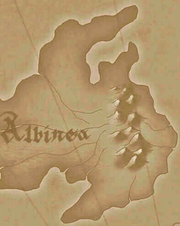
An island continent to the west of Fódlan. It’s inhospitable climate and terrain make it difficult for human settlements but rare fauna thrive on its fertile, untouched lands.
Culture
Albinean, Srengian, Fodlanese
Scattered pockets of civilizations numbering no more than several hundreds to low thousands. Kingdoms that have sprung up are a collection of these pockets over a vast holding of land.
Gold
A smattering of monarchies dot the land. These petty kingdoms range in size and power with their own established royalty. Smaller kingdoms will pledge fealty to larger, more powerful kingdoms through marriage or agreements.
Above all of them is the High King. The High King is chosen
In the event of a murder, a weregild (man price) must be paid. The compensation will depend on the deceased’s social standing, family, and loss from net worth. The family of the victim is within their right to refuse the weregild and enact revenge.
Hair is particularly regulated in the kingdoms. Those in places of royalty are the only ones to keep their hair long, never cutting even in childhood. Nobles are also allowed to have long hair but must cut after a certain length. The length gets shorter as you go down the hierarchy. Commoners must keep their hair short, even shorn in some strictly enforced regions. Women are allowed leniency in this law. Once they reach a point where they can no longer stand on the battlefield, their hair must be cut short.
The central figure of their religion is only known as Akasha, but is rarely ever referred to by their name instead their title is more often used, The Observant.
When Akasha made landfall, their body spanned the entirety of the continent. The tribes present harvested the blood of Akasha and became the origin of the Albinean crest system. Each tribe that consumed the blood each had different parts of knowledge given to them. The knowledge bestowed upon each crest manifested as abilities exclusive to the crest holder. The location of the blood harvested determined the size of the crest. Larger crests tended to have abilities that could bend/warp the laws of reality.
Family lines that survived with their crests to the present day were known to be 'Akasha's Beloved'.
Crests are classified into categories based on size and measured by the amount of lines they possess (Pseudo-nerve cells created). Crowns are the largest that number larger than 70 lines followed by Isthmus that range between 70 to 50 lines. The next lowest crest classification is the Acnestises that range between 50 and 30 lines. The second to last crest classification is the Rasceta that have a size between 30 and 10 lines. Kibes are the smallest sized crests measuring no more than 10 lines. With each successive generation there is a possibility of lines not translating during transferring thus it is possible for a crest to downgrade until nothing at all remains.
The space between the living and the dead is known as The Void. Not quite an afterlife, The Void is considered the beginning and end of life as humans can comprehend it. It is by no means a place of eternal torment nor an infinite paradise. It simply is. When someone dies, their components are returned to The Void, where they cease to exist until they return to the plane of the living.
The body must be complete and whole for a perfect transition to The Void; most importantly, the head must remain attached to the body, as the head is considered the spiritual center of the religion. The head contains the soul and should the head be separated, the spirit shall be trapped on the mortal plane until it is reunited with the missing limb. They wander and gradually lose their sense of self until they become a wraith and curse their lineage. Some anecdotal evidence that was sworn to be true, asserts that the erosion of certain family crests can be attributed to the trophy head collection of the Grimnir family. Less grimly, an incomplete transition to The Void is common excuse for birth defects and limb losses later in life given by practitioners, it was fated to happen to this soul.
The Wild Hunt is a folktale/tradition that is mainly practiced in the northeastern provinces by the Grimnir family and those who have ties to them. It is a procession of the royal “hunting” party. Among the populace, it’s fairly common knowledge that it is more so an omen of death as the king’s army rides out in the night. The leader of the Wild Hunt is always a child of Grimnir.
When a commoner child is born, they will receive a temporary name. This temporary name is replaced with the parent's intended name when the child reaches 3 years of age. This practice is meant to be an imitation of the highborn tradition of epithet bestowal since epithets are a rarity among the lower classes. They will in essence have three names but officially have two.
When a weapon is taken as a trophy in conquest, the weapon is given a new name to give its power to the new owner. However, a weapon undergoing too many name changes can also lose it's strength from sharing it's power with too many previous owners.
Names are said to hold power in the Albinean culture. As such, Albineans will have many names they answer to, not just their birth name. A birth name is kept close to the chest; very few outside of the parents will know it. This privilege is kept mostly among the nobility, the commoners twist this practice into their own tradition since epithets are a scarcity in the lower classes. The epithet is the most common form of address by those of equal or higher standing to the addressee. Those in lower standing to the addressee must use the last name when speaking to the addressee.
Those in the noble classes are often given an epithet. These are usually a mark of distinction and a separate name for common use. They are never chosen, only received and they are not always auspicious. A person my receive many epithets in their life and the form of address will change with them. Epithets are not exclusive to the upper classes, a particularly exceptional commoner may also receive one.
The last names are lineal in nature, emphasizing the importance of inheritance and lineage in the culture. If the family in question is a commoner, the child(ren) will take up the first name of their father and -son for males and -dóttir for females. It is possible for a commoner family of four to have four unique surnames if the children are different genders. Nobles will inherit the name of the crest progenitor creating an unbroken line. Sometimes, nobles will follow the commoner method and use the name-son/-dóttir addressing a noble in the third person of higher status. A rising trend among the commoners is to make their profession their surname, it is especially popular among the mixed races whose names make the standard naming convention unwieldy.
The changing of a name also holds great significance in the culture. When a child is adopted into a family, they have the option of changing their first name. With crest-bearing families, this process is done after the adopted child has received the family crest. By changing their name, the child has shed their attachments to their previous life and embraced their new life as a member of the family. Addressing an adopted person by their old name is considered a grave insult to their new family. This practice also holds true to naming weapons, see the Traditions section above.
Cities
Geography
Subartic
Berries
Northwest of Fódlan
Frozen nearly all year due to how far north it is. Warmer months are short but milder than than the harsh winters. Storms are rare, but despite that winds can reach speeds greater than on the mainland continent. Weather can also unpredictably change, reducing visibility and increasing precipitation and wind speed.
Pockets of biodiversity are concentrated around the natural hot springs that are formed from volcanic activity. Migratory mammals will often travel between hot springs as their grazing grounds. Farmers who raise grazing animals, like reindeer, will follow a similar migratory pattern on a smaller scale.
The mountain range contains a dormant volcano but has rich fertile soil. The vegetation around these areas are a little larger than their variants found on the open plains but still smaller than their counterparts on the mainland.
History
Fódlan-Albinean War
Notes
British Isles/Iceland Influence
Norse/Uralic/Celtic way of living
Native Albineans (Celtic/Uralic)
Fodlan settlers (Celtic/Welsh/Briton)
Sreng Settlers (Norse)
Overview
Details about this location's overview
Albinea
Continent
An island continent to the west of Fódlan. It’s inhospitable climate and terrain make it difficult for human settlements but rare fauna thrive on its fertile, untouched lands.
Culture
Details about this location's culture
Albinean, Srengian, Fodlanese
Scattered pockets of civilizations numbering no more than several hundreds to low thousands. Kingdoms that have sprung up are a collection of these pockets over a vast holding of land.
Gold
A smattering of monarchies dot the land. These petty kingdoms range in size and power with their own established royalty. Smaller kingdoms will pledge fealty to larger, more powerful kingdoms through marriage or agreements.
Above all of them is the High King. The High King is chosen
In the event of a murder, a weregild (man price) must be paid. The compensation will depend on the deceased’s social standing, family, and loss from net worth. The family of the victim is within their right to refuse the weregild and enact revenge.
Hair is particularly regulated in the kingdoms. Those in places of royalty are the only ones to keep their hair long, never cutting even in childhood. Nobles are also allowed to have long hair but must cut after a certain length. The length gets shorter as you go down the hierarchy. Commoners must keep their hair short, even shorn in some strictly enforced regions. Women are allowed leniency in this law. Once they reach a point where they can no longer stand on the battlefield, their hair must be cut short.
The central figure of their religion is only known as Akasha, but is rarely ever referred to by their name instead their title is more often used, The Observant.
When Akasha made landfall, their body spanned the entirety of the continent. The tribes present harvested the blood of Akasha and became the origin of the Albinean crest system. Each tribe that consumed the blood each had different parts of knowledge given to them. The knowledge bestowed upon each crest manifested as abilities exclusive to the crest holder. The location of the blood harvested determined the size of the crest. Larger crests tended to have abilities that could bend/warp the laws of reality.
Family lines that survived with their crests to the present day were known to be 'Akasha's Beloved'.
Crests are classified into categories based on size and measured by the amount of lines they possess (Pseudo-nerve cells created). Crowns are the largest that number larger than 70 lines followed by Isthmus that range between 70 to 50 lines. The next lowest crest classification is the Acnestises that range between 50 and 30 lines. The second to last crest classification is the Rasceta that have a size between 30 and 10 lines. Kibes are the smallest sized crests measuring no more than 10 lines. With each successive generation there is a possibility of lines not translating during transferring thus it is possible for a crest to downgrade until nothing at all remains.
The space between the living and the dead is known as The Void. Not quite an afterlife, The Void is considered the beginning and end of life as humans can comprehend it. It is by no means a place of eternal torment nor an infinite paradise. It simply is. When someone dies, their components are returned to The Void, where they cease to exist until they return to the plane of the living.
The body must be complete and whole for a perfect transition to The Void; most importantly, the head must remain attached to the body, as the head is considered the spiritual center of the religion. The head contains the soul and should the head be separated, the spirit shall be trapped on the mortal plane until it is reunited with the missing limb. They wander and gradually lose their sense of self until they become a wraith and curse their lineage. Some anecdotal evidence that was sworn to be true, asserts that the erosion of certain family crests can be attributed to the trophy head collection of the Grimnir family. Less grimly, an incomplete transition to The Void is common excuse for birth defects and limb losses later in life given by practitioners, it was fated to happen to this soul.
The Wild Hunt is a folktale/tradition that is mainly practiced in the northeastern provinces by the Grimnir family and those who have ties to them. It is a procession of the royal “hunting” party. Among the populace, it’s fairly common knowledge that it is more so an omen of death as the king’s army rides out in the night. The leader of the Wild Hunt is always a child of Grimnir.
When a commoner child is born, they will receive a temporary name. This temporary name is replaced with the parent's intended name when the child reaches 3 years of age. This practice is meant to be an imitation of the highborn tradition of epithet bestowal since epithets are a rarity among the lower classes. They will in essence have three names but officially have two.
When a weapon is taken as a trophy in conquest, the weapon is given a new name to give its power to the new owner. However, a weapon undergoing too many name changes can also lose it's strength from sharing it's power with too many previous owners.
Names are said to hold power in the Albinean culture. As such, Albineans will have many names they answer to, not just their birth name. A birth name is kept close to the chest; very few outside of the parents will know it. This privilege is kept mostly among the nobility, the commoners twist this practice into their own tradition since epithets are a scarcity in the lower classes. The epithet is the most common form of address by those of equal or higher standing to the addressee. Those in lower standing to the addressee must use the last name when speaking to the addressee.
Those in the noble classes are often given an epithet. These are usually a mark of distinction and a separate name for common use. They are never chosen, only received and they are not always auspicious. A person my receive many epithets in their life and the form of address will change with them. Epithets are not exclusive to the upper classes, a particularly exceptional commoner may also receive one.
The last names are lineal in nature, emphasizing the importance of inheritance and lineage in the culture. If the family in question is a commoner, the child(ren) will take up the first name of their father and -son for males and -dóttir for females. It is possible for a commoner family of four to have four unique surnames if the children are different genders. Nobles will inherit the name of the crest progenitor creating an unbroken line. Sometimes, nobles will follow the commoner method and use the name-son/-dóttir addressing a noble in the third person of higher status. A rising trend among the commoners is to make their profession their surname, it is especially popular among the mixed races whose names make the standard naming convention unwieldy.
The changing of a name also holds great significance in the culture. When a child is adopted into a family, they have the option of changing their first name. With crest-bearing families, this process is done after the adopted child has received the family crest. By changing their name, the child has shed their attachments to their previous life and embraced their new life as a member of the family. Addressing an adopted person by their old name is considered a grave insult to their new family. This practice also holds true to naming weapons, see the Traditions section above.
Cities
Details about this location's cities
Geography
Details about this location's geography
Subartic
Berries
Northwest of Fódlan
Frozen nearly all year due to how far north it is. Warmer months are short but milder than than the harsh winters. Storms are rare, but despite that winds can reach speeds greater than on the mainland continent. Weather can also unpredictably change, reducing visibility and increasing precipitation and wind speed.
Pockets of biodiversity are concentrated around the natural hot springs that are formed from volcanic activity. Migratory mammals will often travel between hot springs as their grazing grounds. Farmers who raise grazing animals, like reindeer, will follow a similar migratory pattern on a smaller scale.
The mountain range contains a dormant volcano but has rich fertile soil. The vegetation around these areas are a little larger than their variants found on the open plains but still smaller than their counterparts on the mainland.
History
Details about this location's history
Fódlan-Albinean War
Notes
Details about this location's notes
British Isles/Iceland Influence
Norse/Uralic/Celtic way of living
Native Albineans (Celtic/Uralic)
Fodlan settlers (Celtic/Welsh/Briton)
Sreng Settlers (Norse)
Gallery
Images and visual content for this location
Associations
Other pages that reference or connect to this location
Referenced By
5Ruohtta epithet Auduin
Birthplace
Ankou Cadoc Grimnir
Birthplace
Threo Ailbhe Lastname
Birthplace
Griffon
Habitats
Hippogriff
Habitats
Collections
Published collections that feature this location
Not in any collections yet
This location hasn't been published in any collections yet. Collections are curated groups of related content that help organize and showcase your world.
Tip: Collections are a great way to group related content together and share themed stories or worldbuilding elements with others.
Timelines
Timelines that reference or include this location
No timeline connections yet
This location isn't connected to any timelines yet. Timelines help organize events chronologically and show how your content fits into the broader history of your world.
Tip: Create timelines to organize important events in your world's history. Link characters, locations, and other content to specific events to build rich, interconnected narratives.
Shares
Discussion about this location
No shares yet
Be the first to start a discussion about this location by sharing it to the community stream.
Privacy & Sharing
Manage who can see and access this location
Current Status
refresh
This location is currently
Privacy Settings
Choose who can see and access this location
language Universe Privacy
This page belongs to a universe with its own privacy settings