
Categories
Dive Deeper
Page Stats
Navigation
Categories
Dive Deeper
Page Stats
Complete Details
All information about this technology
Overview
Pulsefuel
Extremely high powered, expensive multi purpose fuel
None
Production
Pulsefuel's basic elements are a combination of precious metals such as Tungsten, Platinum, Gold, more common metals like Magnesium, and reactive non metals like Hydrogen and Carbon.
Pulsefuel is made from a selection of rare metals combined under extreme pressure. The basic, unrefined chemical is found naturally only in extreme environments, namely in deep mines near fault zones where tectonic pressures are sufficent to form the dense material. The natural process is hampered mostly by the suitability of the environemtn, typically the presence and proper quantity of the required materials.
Pulsefuel can also be found on the "surface" of gas giants, which has more consistantn and acessable pressure. Gas giants have also been used in several successful attempts to create pulseful artificially.
Pulsefuel has been made synthetically on the surface of planets using large circular colliders, which are very power instensive. Many designs for orbital Pulsefuel systhesiseres have been submitted, but none of yet have been constructed
At first, Pulsefuel was not available for public sale, due to its strategic importantance and limited quantity. As extraction and production expanded, however, sales slowly started, but at a steep cost.
Solid Pulsefuel is incredibly expensive because it is a more pure compound than liquid fuel. However, solid Pulsefuel propells a Pulse Drive a considerably further than the same quantity of liquid Pulsefuel.
Moderatly or Extremely expensive
Presence
Very rare
Use
Pulsefuel is used for a variety of high power propulsion methods.
Pulsefuel works similar to standard combustion in whatever application it is used in. In such devices, some modification of existing engines is needed to allow Pulsefuel usage.
In Pulsedrives, solid Pulsefuel is delivered into a resonant combustion chamber using a complex delivery system to achieve extreme FTL velocity
Pulsefuel's basic elements are a combination of precious metals such as Tungsten, Platinum, Gold, more common metals like Magnesium, and reactive non metals like Hydrogen and Carbon.
Appearance
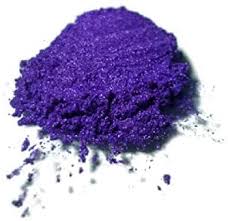
Pulsefuel in both liquid and solid forms has a distinct purple color.
In its liquid form, it has a consistancy similar to water, which accounts for it reduced performance but easier delivery into combustion engines.
In its solid form, it is typically stored as large cylinder rods, about 1 x 1.5 m in length.
In its solid form, it is typically stored as large cylinder rods, about 1 x 1.5 m in length.
Type I: 950 kg/m
Type II: 3700 kg/m
Type III: 5000 kg/m
Type I: Green
Type II: Purple
Type III: Gold
Notes
None
Overview
Details about this technology's overview
Pulsefuel
Extremely high powered, expensive multi purpose fuel
None
Production
Details about this technology's production
Pulsefuel's basic elements are a combination of precious metals such as Tungsten, Platinum, Gold, more common metals like Magnesium, and reactive non metals like Hydrogen and Carbon.
Pulsefuel is made from a selection of rare metals combined under extreme pressure. The basic, unrefined chemical is found naturally only in extreme environments, namely in deep mines near fault zones where tectonic pressures are sufficent to form the dense material. The natural process is hampered mostly by the suitability of the environemtn, typically the presence and proper quantity of the required materials.
Pulsefuel can also be found on the "surface" of gas giants, which has more consistantn and acessable pressure. Gas giants have also been used in several successful attempts to create pulseful artificially.
Pulsefuel has been made synthetically on the surface of planets using large circular colliders, which are very power instensive. Many designs for orbital Pulsefuel systhesiseres have been submitted, but none of yet have been constructed
At first, Pulsefuel was not available for public sale, due to its strategic importantance and limited quantity. As extraction and production expanded, however, sales slowly started, but at a steep cost.
Solid Pulsefuel is incredibly expensive because it is a more pure compound than liquid fuel. However, solid Pulsefuel propells a Pulse Drive a considerably further than the same quantity of liquid Pulsefuel.
Moderatly or Extremely expensive
Presence
Details about this technology's presence
Very rare
Use
Details about this technology's use
Pulsefuel is used for a variety of high power propulsion methods.
Pulsefuel works similar to standard combustion in whatever application it is used in. In such devices, some modification of existing engines is needed to allow Pulsefuel usage.
In Pulsedrives, solid Pulsefuel is delivered into a resonant combustion chamber using a complex delivery system to achieve extreme FTL velocity
Pulsefuel's basic elements are a combination of precious metals such as Tungsten, Platinum, Gold, more common metals like Magnesium, and reactive non metals like Hydrogen and Carbon.
Appearance
Details about this technology's appearance
Pulsefuel in both liquid and solid forms has a distinct purple color.
In its liquid form, it has a consistancy similar to water, which accounts for it reduced performance but easier delivery into combustion engines.
In its solid form, it is typically stored as large cylinder rods, about 1 x 1.5 m in length.
In its solid form, it is typically stored as large cylinder rods, about 1 x 1.5 m in length.
Type I: 950 kg/m
Type II: 3700 kg/m
Type III: 5000 kg/m
Type I: Green
Type II: Purple
Type III: Gold
Related technologies
Details about this technology's related technologies
Notes
Details about this technology's notes
None
Gallery
Images and visual content for this technology
Associations
Other pages that reference or connect to this technology
Referenced By
15Devellion Dayt
Notes
Devellion Dayt
Technologies
All Allied Forces
Technologies
GRU/AAF Casepulse round
Related technologies
Continuous Pulse Drive
Related technologies
A-RW-A-47 Forward Fierce
Fuel
PDETV "Mystic Trench"
Fuel
GRU/AAF Fullpulse round
Resources Used
GRU/AAF Casepulse round
Resources Used
GRU/AAF Fullpulse round
Materials
NAS-H(X)-CV Battle class
Fuel
NA-H(X)-CL
Fuel
PDRTV
Fuel
SFTL
Notes
Turner Aberrant Research Facility
Notes
Collections
Published collections that feature this technology
Not in any collections yet
This technology hasn't been published in any collections yet. Collections are curated groups of related content that help organize and showcase your world.
Tip: Collections are a great way to group related content together and share themed stories or worldbuilding elements with others.
Timelines
Timelines that reference or include this technology
No timeline connections yet
This technology isn't connected to any timelines yet. Timelines help organize events chronologically and show how your content fits into the broader history of your world.
Tip: Create timelines to organize important events in your world's history. Link characters, locations, and other content to specific events to build rich, interconnected narratives.
Shares
Discussion about this technology
No shares yet
Be the first to start a discussion about this technology by sharing it to the community stream.
Privacy & Sharing
Manage who can see and access this technology
Current Status
refresh
This technology is currently
Privacy Settings
Choose who can see and access this technology
language Universe Privacy
This page belongs to a universe with its own privacy settings