
Categories
Dive Deeper
Page Stats
Navigation
Categories
Dive Deeper
Page Stats
Complete Details
All information about this character
Overview
Darius Drachenbär
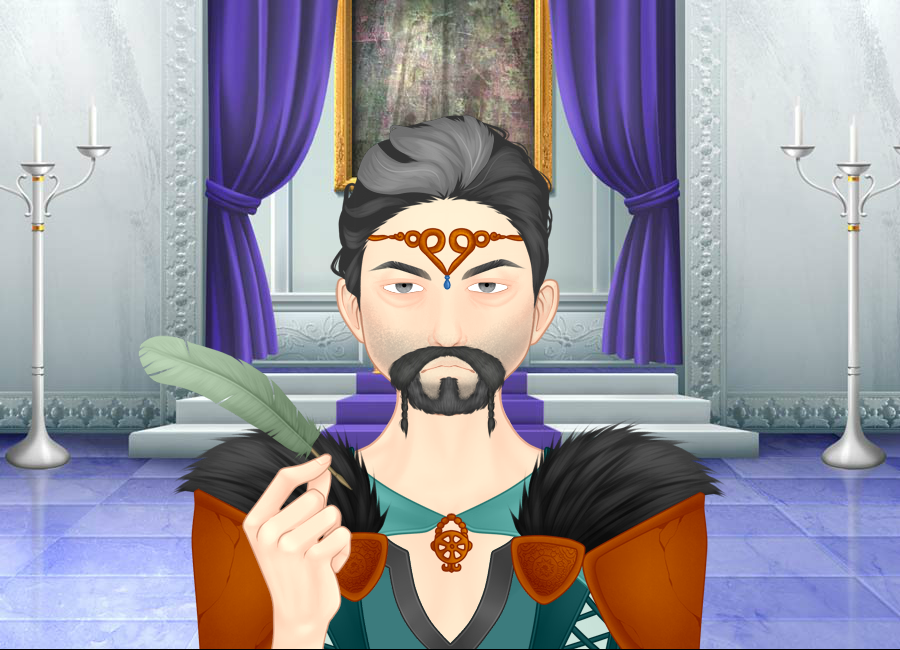
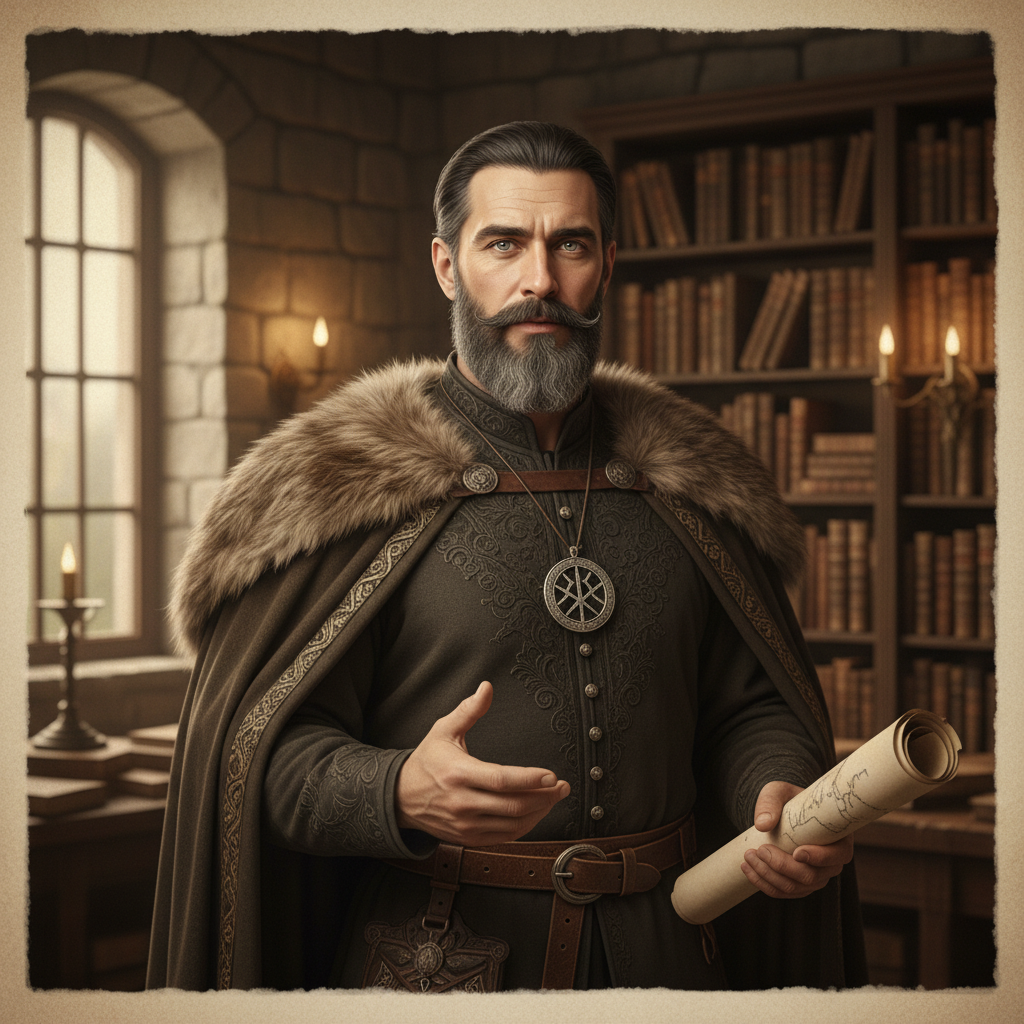
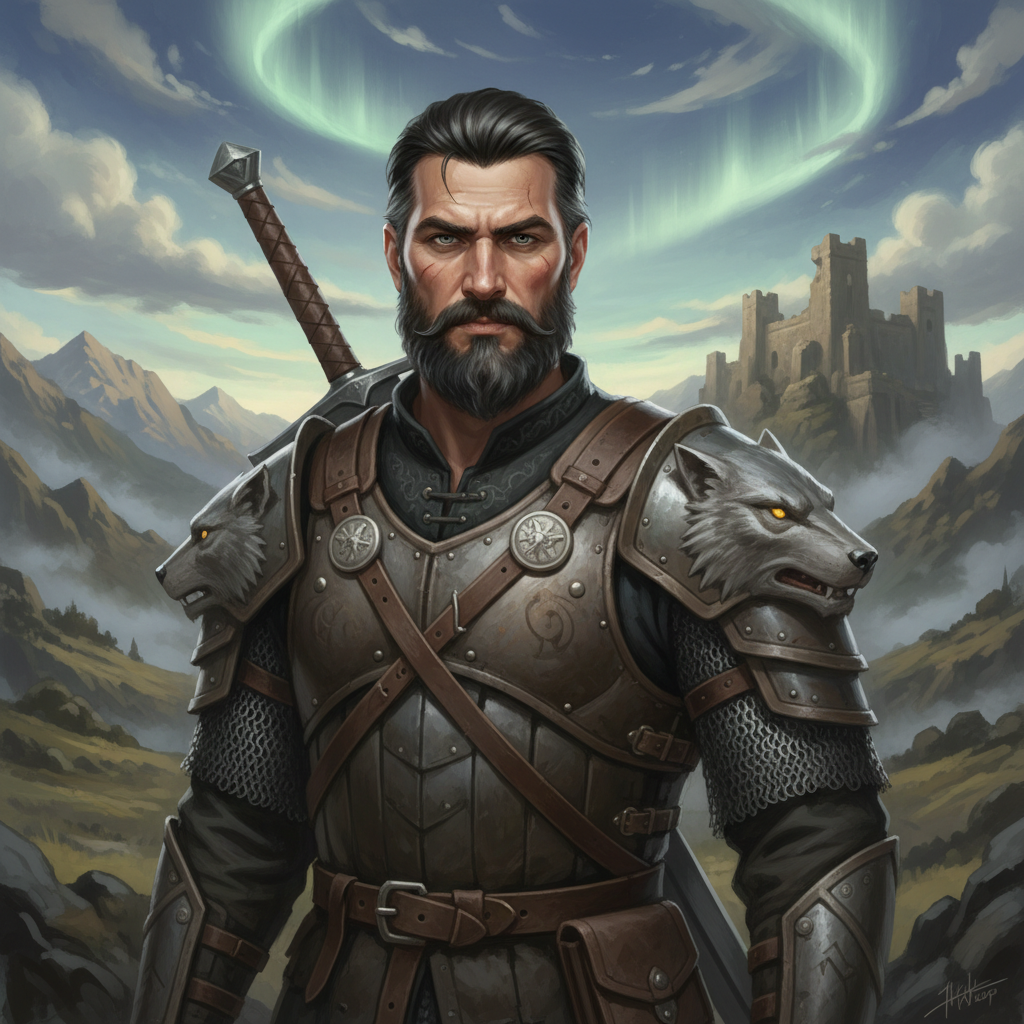
Darius Drachenbär is the founder of House Drachenbär, Lord King of Stanzgar, and Emperor of the Allied Realms, a title reflecting his position as the de facto ruler of the Confederacy after the Alliance of Unity Pact. At forty-six at the signing of that pact, he is a mature but still capable ruler: 5'9", 160 pounds, light-skinned, athletic, and visibly shaped by a life that began in military service before hardening into statecraft, rebellion, and imperial leadership. His black hair, now beginning to turn grey, is combed back in a controlled style, and his styled beard and mustache give him a deliberate, composed, almost severe dignity. His grey eyes suit him well, suggesting a man who observes carefully before acting, weighs cost against result, and rarely spends more effort than a situation requires. Darius is not physically extravagant, nor does he need to be; like many Stanzgarians, his presence comes less from unusual traits than from what he has done with ordinary human limits. He is charismatic, thoughtful, and shrewd, a soldier-politician whose talents in statecraft, swordsmanship, and strategy allowed him to rise from an unlanded noble educated in military academies to the rebel leader who ended the original Stanzgarian dynasty. His dislike of nobles is central to him, not as a rejection of order, but as a rejection of entrenched aristocratic power, corruption, and the wars he came to despise. The name Drachenbär itself began as a Goltari-given title before it became the formal name of his house, reflecting the importance of his time among the Goltari and the identity he built before taking power. As a ruler, Darius is stern, fair, and pragmatic, using only the resources necessary in both political and personal life. He is not an idealist in the soft sense, but he is not careless either; his flaw lies in his reluctance to make new enemies, a dangerous caution for a man trying to weaken noble power while holding together a confederated empire. He is a general, emperor, strategist, husband to Mariana Donnerhirsch, father to Christopher, Michel, and Nicolas, and a man whose revolution did not simply create a throne for himself, but reshaped the political balance of Stanzgar around practical authority, alliance, and the long project of breaking the old nobility’s grip.
Darius Drachenbär, first of house
Lord King of Stanzgar and Emperor of the Allied Realms
46
Male
Looks
Darius wears a styled beard and mustache, kept orderly enough to reinforce his authority without seeming vain or overly ornamental. The grooming suits a man who understands presentation as part of rule: controlled, deliberate, and dignified, but not wasteful. It frames his face in a way that strengthens the impression of age, discipline, and command, especially alongside his combed-back black hair beginning to turn grey and his steady grey eyes. His facial hair helps distinguish him from a merely military figure. Darius is not only a general or swordsman, but a ruler, strategist, rebel founder, and de facto head of a confederated political order. The beard and mustache give him a mature statesman’s presence, suggesting someone accustomed to council chambers as well as battlefields. It also fits his stern, fair, pragmatic nature: neat, intentional, and maintained, but never extravagant. Like much about Darius, it communicates restraint. He does not appear careless, but neither does he overindulge in display. His grooming reflects the same principle that governs his politics and home life: use what is necessary, keep what is useful, and let control speak louder than excess.
Darius wears his hair combed back, a controlled and practical style that suits both his military background and his role as ruler. It keeps the hair away from his face, giving him a clean, deliberate appearance without seeming ornamental or overly fashionable. The style works especially well with his black hair beginning to turn grey, making the signs of age read less as decline and more as authority earned through war, rebellion, and rule. Like his beard and mustache, his hair is maintained with care, but not indulgence. It presents him as a man who understands the value of appearance but refuses to waste effort on excess. The combed-back style gives Darius a stern, composed profile: a general who became a king, a rebel who became emperor, and a statesman who prefers control, clarity, and efficiency over display. It also fits his pragmatic nature. Darius is not trying to look youthful, romantic, or flamboyant; he allows the grey to show because age and experience strengthen the image he needs to project. His hair helps frame him as a mature political figure whose authority comes from discipline, calculation, and the long work of reshaping Stanzgarian power.
Darius has black hair that is beginning to turn grey, a detail that fits his position as a ruler who has passed out of youth but not yet into frailty. The black gives him a strong, severe appearance, while the grey suggests age, burden, and earned authority rather than weakness. It is the hair of a man who has lived through military academies, frontier service, wars he came to despise, rebellion, statecraft, and the formation of a new political order. The greying also reinforces the timing of his life: by the signing of the Alliance of Unity Pact, Darius is forty-six, old enough for command to feel deeply settled on him and young enough that his strength, judgment, and will remain active forces in Stanzgarian politics. Combined with his combed-back style, styled beard and mustache, and grey eyes, his hair color helps create the image of a stern but controlled statesman: not ornamental, not youthful, and not careless. Darius does not appear as a romantic young conqueror, but as a practical founder whose authority has been paid for in years, compromises, campaigns, and political restraint.
5'9"
160lbs
Darius has no singular scar, birthmark, deformity, or unusual physical trait that marks him at a glance, which is fitting for a Stanzgarian ruler whose presence comes more from bearing than from spectacle. His most recognizable features are instead the controlled details of his appearance: black hair beginning to turn grey, combed back from the face; a styled beard and mustache; steady grey eyes; and the composed posture of a soldier-statesman accustomed to command. At 5'9" and 160 pounds, he is not physically overwhelming, but he carries himself with the confidence of a man who has led armies, broken a dynasty, and survived the transition from rebel commander to ruler. His age also marks him in a subtler way. By the signing of the Alliance of Unity Pact, Darius is forty-six, old enough that the strain of war, governance, and political compromise has begun to show, but not so old that he has lost his physical authority. The grey in his hair, the discipline of his grooming, and the restraint of his expression all help identify him as a man who does not waste motion, words, or resources. In public, he is likely most recognizable through presentation rather than bodily marks: formal military bearing, practical but dignified dress, blue accents or colors associated with his preference, and the symbolic weight of the Drachenbär name itself. Since that name began as a Goltari-given title before becoming the formal foundation of House Drachenbär, it functions almost like an identifying mark of reputation. Darius does not need a visible wound or strange feature to be recognized; his marks are historical and political, carried in his greying hair, measured gaze, controlled appearance, and the authority of a man who made himself impossible to ignore.
Darius has an athletic body type, practical rather than imposing, with the lean strength expected of a man shaped by military academies, command, campaign life, and long political strain. At 5'9" and 160 pounds, he falls well within ordinary Stanzgarian human ranges, but he carries that frame with disciplined purpose. He is not massive, ornamental, or built like a heroic statue; his physique suggests function, endurance, and control, the body of a swordsman-general who has remained active even after becoming a ruler. By the signing of the Alliance of Unity Pact, age has begun to catch up with him, but not enough to make him seem weak. Instead, the effect is one of maturity under pressure: a capable man whose body has absorbed years of service, war, rebellion, and governance. His athleticism likely shows less in exaggerated muscle and more in posture, balance, and economy of motion. Darius looks like someone who knows how to conserve strength, when to act, and when not to waste effort. This fits his personality as much as his appearance. He is stern, fair, pragmatic, and careful with resources, and his body reflects the same principle. Nothing about him suggests excess. He appears maintained, capable, and controlled, a ruler who may now spend more time in council chambers than on battlefields, but who still carries the habits of a soldier and strategist in the way he stands, moves, and presents himself.
Darius has a light skin tone, fitting comfortably within the common range for Stanzgarians of the Riverlands and long-established Stanzgarian population centers. His complexion does not mark him as unusual, exotic, or visibly outside the ordinary expectations of his people; instead, it reinforces his identity as a broadly Stanzgarian figure whose distinction comes from action, command, and political consequence rather than striking physical traits. In keeping with his military background, his skin would likely show some signs of life outdoors and on campaign, but not enough to obscure the impression of a ruler who now spends much of his time in halls of power, councils, military planning, and formal audiences. The lightness of his complexion pairs well with his black-and-grey hair, styled beard and mustache, and grey eyes, giving him a stern, composed appearance. He does not look ornamental or soft, but neither does he present as a rugged frontier warlord. Darius appears as a disciplined Stanzgarian statesman: a man whose body still remembers the field, but whose bearing belongs increasingly to the throne, the council chamber, and the long work of rule.
Stanzgarian
grey
Nature
Darius’s strongest prejudice is against the Stanzgarian nobility, though it is less a simple hatred of nobles as people and more a deep resentment of entrenched aristocratic power. As an unlanded noble who rose through military service, strategy, alliance-building, and rebellion, Darius has seen the noble class from both inside and below. He understands its rituals, privileges, bargains, and hypocrisies, and he dislikes how much influence nobles can retain even when they have failed the people and the state. This prejudice becomes especially sharp after he usurps the old royal family, because victory does not free him from the nobility; it forces him to manage them. Darius may have broken the original Stanzgarian dynasty, but he cannot simply destroy every noble house without fracturing the realm he is trying to rule. As Emperor of the Allied Realms and de facto ruler of the Confederacy, he must compromise with, appease, reward, threaten, and incorporate the very class whose power he wants to reduce. That necessity frustrates him deeply. He dislikes having to spend political capital on people he sees as self-interested obstacles, but his pragmatism prevents him from acting purely out of anger. This makes his prejudice politically significant rather than merely personal. Darius does not want chaos; he wants noble power contained, redirected, and made subordinate to broader Stanzgarian stability. His flaw, however, is that he is unwilling to make new enemies when he can avoid it, which means he may tolerate noble influence longer than he wants to. He is a ruler who dislikes nobles, depends on some of them, bargains with many of them, and quietly works to make all of them less necessary.
Age is beginning to catch up with Darius, though not in a way that has made him frail or incapable. At forty-six at the signing of the Alliance of Unity Pact, he remains athletic, disciplined, and mentally sharp, but he is no longer the young military officer or rebel commander who could absorb every campaign, council session, and political crisis without cost. The strain of war, statecraft, rebellion, and empire-building has begun to leave marks on him, visible in the greying of his black hair, the increased weight of his responsibilities, and the need to conserve his strength more carefully than he once did. This condition is not a dramatic illness so much as accumulated wear. Darius is a fundamentally human Stanzgarian, bound by ordinary limits, and his body reflects years of military service, strategy, travel, command, and governance. He likely still trains, rides, spars, and maintains the habits of a swordsman-general, but he must be more deliberate now. Recovery takes longer, old aches return in poor weather, and exhaustion may settle deeper after long negotiations or crisis campaigns. This fits his personality: he does not waste resources, including his own energy. Age catching up with him may also sharpen his pragmatism. Darius knows his time as founder-ruler is not infinite, and that the political order he built must survive beyond his personal strength. His condition therefore reinforces one of the quiet pressures of his reign: he must break noble power, stabilize the Confederacy, manage compromise, and prepare the future while he is still strong enough to force the necessary changes into place.
Darius is charismatic, thoughtful, and shrewd, with the controlled presence of a man who learned command before he ever gained a throne. He does not waste words, gestures, or attention. In conversation, he is likely measured and deliberate, allowing others to speak long enough to expose their priorities before he gives his own answer. His charisma is not theatrical warmth, but disciplined force: the ability to make people feel that he has understood the room, weighed the cost, and already begun moving toward the most practical solution. As a former military man and strategist, Darius likely carries himself with upright economy, standing and sitting as if still aware of formation, distance, and exits. He listens closely, asks precise questions, and favors conclusions that can be acted upon rather than arguments that merely sound principled. His shrewdness would show in small pauses, careful phrasing, and a tendency to give away less than he has learned. Around nobles, especially those he must appease after overthrowing the old royal family, his restraint likely becomes colder. He may remain courteous, but his patience has edges; he knows when compromise is necessary, yet dislikes every ounce of power he must leave in aristocratic hands. In private, Darius’s mannerisms are probably quieter and more economical still. His hobbies of writing, reading, and painting suggest a man who processes thought through controlled acts of composition rather than idle display. Whether managing a household, a council, or a war effort, he behaves according to the same principle: use only what is necessary, keep control of the field, and never spend more force than the situation requires.
Darius is motivated by the long project of ending, or at least permanently reducing, the power of the Stanzgarian nobility. This does not mean he opposes order, hierarchy, or governance; he is himself a ruler, general, and emperor. What he opposes is the old noble habit of treating power as inherited entitlement, private privilege, and insulation from consequence. His experiences as an unlanded noble, soldier, lesser noble in River Road’s service, and eventual rebel leader all taught him that noble power could obstruct good rule as easily as support it. The wars with the Fengalin and the orcs appear to have hardened this belief, planting the dissent that eventually led him to overthrow the original Stanzgarian dynasty. At the same time, Darius is strongly motivated by keeping the realm at peace. His rebellion was not simply an act of ambition or revenge against the royal family; it was an attempt to create a more stable political order after seeing how badly noble and dynastic power could drag the realm into destructive conflict. As Emperor of the Allied Realms, he has to hold together a Confederacy of allied states, competing interests, military obligations, regional powers, and old aristocratic families that cannot simply be erased without starting another crisis. This makes peace both a moral aim and a practical necessity. Darius wants to weaken the nobles, but he does not want to shatter the realm in the process. These two motivations often pull against each other. His desire to curb noble power pushes him toward reform, centralization, and political pressure; his desire for peace forces him to compromise, appease, and avoid creating too many new enemies at once. This tension defines much of his rule. Darius is not a reckless revolutionary after the throne is won. He is a pragmatic founder trying to make the results of rebellion endure, using only the force necessary, spending political capital carefully, and accepting imperfect settlements when open conflict would cost the realm too much.
Darius’s central flaw is that he is unwilling to make new enemies when he can avoid it, especially enemies his children will be forced to inherit. This restraint is not cowardice, softness, or indecision; it comes from a founder’s awareness that every feud he creates can outlive him. As the man who overthrew the original Stanzgarian dynasty and became Emperor of the Allied Realms, Darius knows that victory does not end politics. It only changes which knives are hidden under the table. Every noble house he humiliates too openly, every regional power he crushes too completely, and every faction he turns into a permanent enemy may become a future burden for Christopher, Michel, Nicolas, Richard, or Desmond. His caution is therefore deeply paternal as well as political. Darius wants to weaken the old nobility, secure the Confederacy, and keep the realm at peace, but he also wants to leave his children a realm they can actually govern rather than a throne surrounded by inherited vendettas. This makes him more willing to compromise, appease, or delay than his own beliefs would prefer. He may tolerate nobles he despises, preserve privileges he wants to abolish, or accept half-measures because the cleaner, harsher solution would create a blood-debt his heirs would have to pay. The danger is that this caution can slow reform and allow entrenched enemies time to adapt. Darius understands force, but he also understands consequence, and sometimes that understanding becomes a chain. His flaw is not that he lacks resolve; it is that he sees too many futures at once and refuses to purchase victory today with his children’s wars tomorrow.
Darius’s chief talents are statecraft, swordsmanship, and strategy, each of which reflects a different stage of his life. His swordsmanship comes from his military education and early service, when he was still an unlanded noble expected to prove his worth through discipline, martial ability, and usefulness. He is not merely a ceremonial swordsman; his skill was tested in war, especially during the Talarans’ failed northern campaign and the later conflicts with the Fengalin and orcs. His strategic talent grew from the same foundation, but became more important as his responsibilities expanded. Darius is able to read conflict at scale: terrain, supply, morale, loyalty, timing, political consequence, and the point at which victory becomes too expensive to be worth taking. This makes him dangerous not because he is reckless, but because he knows exactly how much force a situation requires. His talent for statecraft is what elevates him beyond a capable general. Darius understands institutions, alliances, noble interests, economic pressure, and the delicate work of ruling a confederated realm without allowing it to tear itself apart. He can bargain with nobles he dislikes, preserve peace without surrendering authority, and weaken entrenched power without turning every aristocratic house into an enemy his children will inherit. His charisma and shrewdness support this talent, allowing him to persuade, pressure, delay, or compromise as needed. His summoning magic adds another layer, though it does not define him as much as his practical abilities do. Darius is talented because he can move between battlefield, council chamber, and imperial strategy without losing sight of the larger objective: keeping the realm stable while reshaping the power beneath it.
Darius’s hobbies are writing, reading, and painting, all of which suit a ruler who thinks in structure, restraint, and long consequence. Writing gives him a way to order thought, record decisions, shape arguments, and refine the political logic behind his rule. He is not the sort of man to treat words as decoration; for Darius, writing is likely a tool of discipline, whether used for private reflections, military notes, political drafts, correspondence, or the careful framing of policies meant to outlast him. Reading serves a similar purpose. Darius is college-educated, multilingual, and shaped by military academies, foreign travel, war, rebellion, and government, so his reading likely ranges across history, strategy, law, statecraft, religion, and accounts of other peoples. It allows him to test his own judgments against the failures and successes of others. Painting, by contrast, reveals a quieter and more controlled side of him. It is still disciplined, still deliberate, but less directly useful in the political sense. A man who spends his public life managing nobles, alliances, armies, and the fragile peace of the realm may value painting because it allows him to make something ordered without having to bargain with anyone. These hobbies show that Darius is not idle in rest. Even his private pursuits are measured, focused, and constructive, belonging to a man who prefers thought over indulgence and controlled creation over excess.
Darius is stern, fair, and pragmatic, a ruler whose personality is built around restraint, calculation, and necessary action. He is not warm in an easy or indulgent way, but he is not cruel for cruelty’s sake either. His fairness comes from discipline rather than sentiment: he weighs what is owed, what is useful, what is sustainable, and what result will leave the realm stronger than before. In both politics and private life, Darius prefers to use only the resources necessary, whether those resources are soldiers, coin, favors, threats, time, or emotional energy. This gives him a controlled, economical presence, as if every word and gesture has been rationed before it is spent. His pragmatism makes him highly effective, but also difficult to satisfy. Darius dislikes noble power and wants to reduce its grip on Stanzgar, yet he understands that ruling after rebellion requires compromise. He is charismatic and shrewd enough to win loyalty, but thoughtful enough to recognize that victory can create problems his children will inherit if he acts too harshly or too quickly. This gives his personality a constant tension: the reformer who wants to break old aristocratic power, the father who wants to leave his children peace rather than vendettas, and the emperor who knows that peace often requires tolerating people he would rather remove from influence. At his core, Darius is a builder of controlled outcomes. He is a military man turned statesman, a rebel turned ruler, and a practical founder who distrusts excess in all forms. He can be severe, cautious, and politically unsentimental, but his severity is directed toward stability rather than vanity. He is the sort of man who would rather make a difficult compromise than enjoy a dramatic victory that poisons the future.
Social
Grilled eel
The dragon
swords
his children
Blue
General/Emperor/
Darius does not merely hold political opinions; as Lord King of Stanzgar and Emperor of the Allied Realms, he sets the political direction of the realm. His rule is defined by the aftermath of rebellion: he overthrew the original Stanzgarian dynasty, took power as the founder of House Drachenbär, and became the de facto ruler of the Confederacy through the political order formalized by the Alliance of Unity Pact. His politics are therefore practical, centralizing, and anti-aristocratic in tendency, but not recklessly revolutionary. Darius wants to reduce the power of the nobility, especially the entrenched noble houses that preserved their privileges through inheritance, influence, and compromise, but he understands that they cannot all be destroyed without plunging the realm back into war. This gives his politics their central tension. Darius believes noble power must be contained and subordinated to the stability of the realm, yet he is also committed to keeping the realm at peace. He compromises with nobles he dislikes, appeases factions he would rather weaken, and avoids creating enemies his children will have to inherit. As a result, his politics are often slower and more measured than his private beliefs. He does not rule by purity or grand theory; he rules by pressure, settlement, careful reform, and the calculated use of authority. As Emperor of the Allied Realms, Darius’s politics also extend beyond ordinary Stanzgarian kingship. He is not simply a monarch sitting above a single kingdom, but the dominant political figure within a confederated structure of allied realms, regional powers, and competing interests. His authority depends on military legitimacy, strategic alliances, practical governance, and the ability to keep enough factions invested in the peace he built. In this sense, Darius’s politics are founder’s politics: dismantle enough of the old order to prevent its return, preserve enough of the realm to prevent collapse, and leave his heirs a government stronger than the throne he seized.
Stanzgarian Church of the one
Emperor of Stanzgar
History
The spring
Darius Drachenbär was born in River Road, within the Stanzgar River Valley, and spent his youth in military academies, as was expected for an unlanded noble of his station. His early life was shaped by discipline, martial education, and the need to make himself useful without the inherited security of land or major title. This background gave him the habits that would later define him as both soldier and ruler: restraint, economy of force, strategic thinking, and a practical understanding that status without competence was fragile. After completing his schooling in the Riverlands, Darius eventually made his way to the Goltari homeland, where he became close with the people there and earned the name or title Drachenbär before it ever became a formal house name. This period was important to his identity, because it gave him a reputation and selfhood outside the old Stanzgarian noble order. He was not yet the founder of House Drachenbär, but the name had already begun to carry meaning around him. Darius was later called back to his homeland and pressed into service during the Talarans’ failed war in the north, where his skill in combat and strategy became impossible to ignore. His performance earned him the favor of the master of River Road, allowing him to rise into lesser nobility and take on duties assisting River Road in policing its lands and maintaining order. Though this advancement gave him a place within the system, it also exposed him more directly to its failures. Darius aided the wars against the Fengalin and later the orcs, as was expected of a noble, but he openly detested both conflicts. Those wars appear to have hardened his distrust of noble and dynastic power, showing him how easily aristocratic obligation, royal ambition, and inherited authority could drag the realm into bloodshed. Over time, that disgust became dissent. Darius’s rebellion was not born from a single moment, but from years of accumulated resentment, military experience, political observation, and practical frustration. He came to believe that the old Stanzgarian dynasty and the entrenched nobility around it had become obstacles to peace and stability. Eventually, he led the rebellion that ended the original Stanzgarian royal line and placed himself at the head of a new order. Only after this did House Drachenbär formally come into existence, turning the Goltari-given name into the foundation of a ruling house. As Lord King of Stanzgar and later Emperor of the Allied Realms, Darius became the de facto ruler of the Confederacy, with his authority formalized through the Alliance of Unity Pact. His background is therefore the story of an unlanded noble transformed by military service, foreign friendship, war, disgust, and rebellion into a founder-ruler. He did not simply inherit power; he constructed it from discipline, strategy, alliance, and the hard conclusion that peace would require breaking the old order without destroying the realm in the process.
collage level
Family
n/a
Overview
Details about this character's overview
Darius Drachenbär
Darius Drachenbär is the founder of House Drachenbär, Lord King of Stanzgar, and Emperor of the Allied Realms, a title reflecting his position as the de facto ruler of the Confederacy after the Alliance of Unity Pact. At forty-six at the signing of that pact, he is a mature but still capable ruler: 5'9", 160 pounds, light-skinned, athletic, and visibly shaped by a life that began in military service before hardening into statecraft, rebellion, and imperial leadership. His black hair, now beginning to turn grey, is combed back in a controlled style, and his styled beard and mustache give him a deliberate, composed, almost severe dignity. His grey eyes suit him well, suggesting a man who observes carefully before acting, weighs cost against result, and rarely spends more effort than a situation requires. Darius is not physically extravagant, nor does he need to be; like many Stanzgarians, his presence comes less from unusual traits than from what he has done with ordinary human limits. He is charismatic, thoughtful, and shrewd, a soldier-politician whose talents in statecraft, swordsmanship, and strategy allowed him to rise from an unlanded noble educated in military academies to the rebel leader who ended the original Stanzgarian dynasty. His dislike of nobles is central to him, not as a rejection of order, but as a rejection of entrenched aristocratic power, corruption, and the wars he came to despise. The name Drachenbär itself began as a Goltari-given title before it became the formal name of his house, reflecting the importance of his time among the Goltari and the identity he built before taking power. As a ruler, Darius is stern, fair, and pragmatic, using only the resources necessary in both political and personal life. He is not an idealist in the soft sense, but he is not careless either; his flaw lies in his reluctance to make new enemies, a dangerous caution for a man trying to weaken noble power while holding together a confederated empire. He is a general, emperor, strategist, husband to Mariana Donnerhirsch, father to Christopher, Michel, and Nicolas, and a man whose revolution did not simply create a throne for himself, but reshaped the political balance of Stanzgar around practical authority, alliance, and the long project of breaking the old nobility’s grip.
Darius Drachenbär, first of house
Lord King of Stanzgar and Emperor of the Allied Realms
46
Male
Looks
Details about this character's looks
Darius wears a styled beard and mustache, kept orderly enough to reinforce his authority without seeming vain or overly ornamental. The grooming suits a man who understands presentation as part of rule: controlled, deliberate, and dignified, but not wasteful. It frames his face in a way that strengthens the impression of age, discipline, and command, especially alongside his combed-back black hair beginning to turn grey and his steady grey eyes. His facial hair helps distinguish him from a merely military figure. Darius is not only a general or swordsman, but a ruler, strategist, rebel founder, and de facto head of a confederated political order. The beard and mustache give him a mature statesman’s presence, suggesting someone accustomed to council chambers as well as battlefields. It also fits his stern, fair, pragmatic nature: neat, intentional, and maintained, but never extravagant. Like much about Darius, it communicates restraint. He does not appear careless, but neither does he overindulge in display. His grooming reflects the same principle that governs his politics and home life: use what is necessary, keep what is useful, and let control speak louder than excess.
Darius wears his hair combed back, a controlled and practical style that suits both his military background and his role as ruler. It keeps the hair away from his face, giving him a clean, deliberate appearance without seeming ornamental or overly fashionable. The style works especially well with his black hair beginning to turn grey, making the signs of age read less as decline and more as authority earned through war, rebellion, and rule. Like his beard and mustache, his hair is maintained with care, but not indulgence. It presents him as a man who understands the value of appearance but refuses to waste effort on excess. The combed-back style gives Darius a stern, composed profile: a general who became a king, a rebel who became emperor, and a statesman who prefers control, clarity, and efficiency over display. It also fits his pragmatic nature. Darius is not trying to look youthful, romantic, or flamboyant; he allows the grey to show because age and experience strengthen the image he needs to project. His hair helps frame him as a mature political figure whose authority comes from discipline, calculation, and the long work of reshaping Stanzgarian power.
Darius has black hair that is beginning to turn grey, a detail that fits his position as a ruler who has passed out of youth but not yet into frailty. The black gives him a strong, severe appearance, while the grey suggests age, burden, and earned authority rather than weakness. It is the hair of a man who has lived through military academies, frontier service, wars he came to despise, rebellion, statecraft, and the formation of a new political order. The greying also reinforces the timing of his life: by the signing of the Alliance of Unity Pact, Darius is forty-six, old enough for command to feel deeply settled on him and young enough that his strength, judgment, and will remain active forces in Stanzgarian politics. Combined with his combed-back style, styled beard and mustache, and grey eyes, his hair color helps create the image of a stern but controlled statesman: not ornamental, not youthful, and not careless. Darius does not appear as a romantic young conqueror, but as a practical founder whose authority has been paid for in years, compromises, campaigns, and political restraint.
5'9"
160lbs
Darius has no singular scar, birthmark, deformity, or unusual physical trait that marks him at a glance, which is fitting for a Stanzgarian ruler whose presence comes more from bearing than from spectacle. His most recognizable features are instead the controlled details of his appearance: black hair beginning to turn grey, combed back from the face; a styled beard and mustache; steady grey eyes; and the composed posture of a soldier-statesman accustomed to command. At 5'9" and 160 pounds, he is not physically overwhelming, but he carries himself with the confidence of a man who has led armies, broken a dynasty, and survived the transition from rebel commander to ruler. His age also marks him in a subtler way. By the signing of the Alliance of Unity Pact, Darius is forty-six, old enough that the strain of war, governance, and political compromise has begun to show, but not so old that he has lost his physical authority. The grey in his hair, the discipline of his grooming, and the restraint of his expression all help identify him as a man who does not waste motion, words, or resources. In public, he is likely most recognizable through presentation rather than bodily marks: formal military bearing, practical but dignified dress, blue accents or colors associated with his preference, and the symbolic weight of the Drachenbär name itself. Since that name began as a Goltari-given title before becoming the formal foundation of House Drachenbär, it functions almost like an identifying mark of reputation. Darius does not need a visible wound or strange feature to be recognized; his marks are historical and political, carried in his greying hair, measured gaze, controlled appearance, and the authority of a man who made himself impossible to ignore.
Darius has an athletic body type, practical rather than imposing, with the lean strength expected of a man shaped by military academies, command, campaign life, and long political strain. At 5'9" and 160 pounds, he falls well within ordinary Stanzgarian human ranges, but he carries that frame with disciplined purpose. He is not massive, ornamental, or built like a heroic statue; his physique suggests function, endurance, and control, the body of a swordsman-general who has remained active even after becoming a ruler. By the signing of the Alliance of Unity Pact, age has begun to catch up with him, but not enough to make him seem weak. Instead, the effect is one of maturity under pressure: a capable man whose body has absorbed years of service, war, rebellion, and governance. His athleticism likely shows less in exaggerated muscle and more in posture, balance, and economy of motion. Darius looks like someone who knows how to conserve strength, when to act, and when not to waste effort. This fits his personality as much as his appearance. He is stern, fair, pragmatic, and careful with resources, and his body reflects the same principle. Nothing about him suggests excess. He appears maintained, capable, and controlled, a ruler who may now spend more time in council chambers than on battlefields, but who still carries the habits of a soldier and strategist in the way he stands, moves, and presents himself.
Darius has a light skin tone, fitting comfortably within the common range for Stanzgarians of the Riverlands and long-established Stanzgarian population centers. His complexion does not mark him as unusual, exotic, or visibly outside the ordinary expectations of his people; instead, it reinforces his identity as a broadly Stanzgarian figure whose distinction comes from action, command, and political consequence rather than striking physical traits. In keeping with his military background, his skin would likely show some signs of life outdoors and on campaign, but not enough to obscure the impression of a ruler who now spends much of his time in halls of power, councils, military planning, and formal audiences. The lightness of his complexion pairs well with his black-and-grey hair, styled beard and mustache, and grey eyes, giving him a stern, composed appearance. He does not look ornamental or soft, but neither does he present as a rugged frontier warlord. Darius appears as a disciplined Stanzgarian statesman: a man whose body still remembers the field, but whose bearing belongs increasingly to the throne, the council chamber, and the long work of rule.
Stanzgarian
grey
Nature
Details about this character's nature
Darius’s strongest prejudice is against the Stanzgarian nobility, though it is less a simple hatred of nobles as people and more a deep resentment of entrenched aristocratic power. As an unlanded noble who rose through military service, strategy, alliance-building, and rebellion, Darius has seen the noble class from both inside and below. He understands its rituals, privileges, bargains, and hypocrisies, and he dislikes how much influence nobles can retain even when they have failed the people and the state. This prejudice becomes especially sharp after he usurps the old royal family, because victory does not free him from the nobility; it forces him to manage them. Darius may have broken the original Stanzgarian dynasty, but he cannot simply destroy every noble house without fracturing the realm he is trying to rule. As Emperor of the Allied Realms and de facto ruler of the Confederacy, he must compromise with, appease, reward, threaten, and incorporate the very class whose power he wants to reduce. That necessity frustrates him deeply. He dislikes having to spend political capital on people he sees as self-interested obstacles, but his pragmatism prevents him from acting purely out of anger. This makes his prejudice politically significant rather than merely personal. Darius does not want chaos; he wants noble power contained, redirected, and made subordinate to broader Stanzgarian stability. His flaw, however, is that he is unwilling to make new enemies when he can avoid it, which means he may tolerate noble influence longer than he wants to. He is a ruler who dislikes nobles, depends on some of them, bargains with many of them, and quietly works to make all of them less necessary.
Age is beginning to catch up with Darius, though not in a way that has made him frail or incapable. At forty-six at the signing of the Alliance of Unity Pact, he remains athletic, disciplined, and mentally sharp, but he is no longer the young military officer or rebel commander who could absorb every campaign, council session, and political crisis without cost. The strain of war, statecraft, rebellion, and empire-building has begun to leave marks on him, visible in the greying of his black hair, the increased weight of his responsibilities, and the need to conserve his strength more carefully than he once did. This condition is not a dramatic illness so much as accumulated wear. Darius is a fundamentally human Stanzgarian, bound by ordinary limits, and his body reflects years of military service, strategy, travel, command, and governance. He likely still trains, rides, spars, and maintains the habits of a swordsman-general, but he must be more deliberate now. Recovery takes longer, old aches return in poor weather, and exhaustion may settle deeper after long negotiations or crisis campaigns. This fits his personality: he does not waste resources, including his own energy. Age catching up with him may also sharpen his pragmatism. Darius knows his time as founder-ruler is not infinite, and that the political order he built must survive beyond his personal strength. His condition therefore reinforces one of the quiet pressures of his reign: he must break noble power, stabilize the Confederacy, manage compromise, and prepare the future while he is still strong enough to force the necessary changes into place.
Darius is charismatic, thoughtful, and shrewd, with the controlled presence of a man who learned command before he ever gained a throne. He does not waste words, gestures, or attention. In conversation, he is likely measured and deliberate, allowing others to speak long enough to expose their priorities before he gives his own answer. His charisma is not theatrical warmth, but disciplined force: the ability to make people feel that he has understood the room, weighed the cost, and already begun moving toward the most practical solution. As a former military man and strategist, Darius likely carries himself with upright economy, standing and sitting as if still aware of formation, distance, and exits. He listens closely, asks precise questions, and favors conclusions that can be acted upon rather than arguments that merely sound principled. His shrewdness would show in small pauses, careful phrasing, and a tendency to give away less than he has learned. Around nobles, especially those he must appease after overthrowing the old royal family, his restraint likely becomes colder. He may remain courteous, but his patience has edges; he knows when compromise is necessary, yet dislikes every ounce of power he must leave in aristocratic hands. In private, Darius’s mannerisms are probably quieter and more economical still. His hobbies of writing, reading, and painting suggest a man who processes thought through controlled acts of composition rather than idle display. Whether managing a household, a council, or a war effort, he behaves according to the same principle: use only what is necessary, keep control of the field, and never spend more force than the situation requires.
Darius is motivated by the long project of ending, or at least permanently reducing, the power of the Stanzgarian nobility. This does not mean he opposes order, hierarchy, or governance; he is himself a ruler, general, and emperor. What he opposes is the old noble habit of treating power as inherited entitlement, private privilege, and insulation from consequence. His experiences as an unlanded noble, soldier, lesser noble in River Road’s service, and eventual rebel leader all taught him that noble power could obstruct good rule as easily as support it. The wars with the Fengalin and the orcs appear to have hardened this belief, planting the dissent that eventually led him to overthrow the original Stanzgarian dynasty. At the same time, Darius is strongly motivated by keeping the realm at peace. His rebellion was not simply an act of ambition or revenge against the royal family; it was an attempt to create a more stable political order after seeing how badly noble and dynastic power could drag the realm into destructive conflict. As Emperor of the Allied Realms, he has to hold together a Confederacy of allied states, competing interests, military obligations, regional powers, and old aristocratic families that cannot simply be erased without starting another crisis. This makes peace both a moral aim and a practical necessity. Darius wants to weaken the nobles, but he does not want to shatter the realm in the process. These two motivations often pull against each other. His desire to curb noble power pushes him toward reform, centralization, and political pressure; his desire for peace forces him to compromise, appease, and avoid creating too many new enemies at once. This tension defines much of his rule. Darius is not a reckless revolutionary after the throne is won. He is a pragmatic founder trying to make the results of rebellion endure, using only the force necessary, spending political capital carefully, and accepting imperfect settlements when open conflict would cost the realm too much.
Darius’s central flaw is that he is unwilling to make new enemies when he can avoid it, especially enemies his children will be forced to inherit. This restraint is not cowardice, softness, or indecision; it comes from a founder’s awareness that every feud he creates can outlive him. As the man who overthrew the original Stanzgarian dynasty and became Emperor of the Allied Realms, Darius knows that victory does not end politics. It only changes which knives are hidden under the table. Every noble house he humiliates too openly, every regional power he crushes too completely, and every faction he turns into a permanent enemy may become a future burden for Christopher, Michel, Nicolas, Richard, or Desmond. His caution is therefore deeply paternal as well as political. Darius wants to weaken the old nobility, secure the Confederacy, and keep the realm at peace, but he also wants to leave his children a realm they can actually govern rather than a throne surrounded by inherited vendettas. This makes him more willing to compromise, appease, or delay than his own beliefs would prefer. He may tolerate nobles he despises, preserve privileges he wants to abolish, or accept half-measures because the cleaner, harsher solution would create a blood-debt his heirs would have to pay. The danger is that this caution can slow reform and allow entrenched enemies time to adapt. Darius understands force, but he also understands consequence, and sometimes that understanding becomes a chain. His flaw is not that he lacks resolve; it is that he sees too many futures at once and refuses to purchase victory today with his children’s wars tomorrow.
Darius’s chief talents are statecraft, swordsmanship, and strategy, each of which reflects a different stage of his life. His swordsmanship comes from his military education and early service, when he was still an unlanded noble expected to prove his worth through discipline, martial ability, and usefulness. He is not merely a ceremonial swordsman; his skill was tested in war, especially during the Talarans’ failed northern campaign and the later conflicts with the Fengalin and orcs. His strategic talent grew from the same foundation, but became more important as his responsibilities expanded. Darius is able to read conflict at scale: terrain, supply, morale, loyalty, timing, political consequence, and the point at which victory becomes too expensive to be worth taking. This makes him dangerous not because he is reckless, but because he knows exactly how much force a situation requires. His talent for statecraft is what elevates him beyond a capable general. Darius understands institutions, alliances, noble interests, economic pressure, and the delicate work of ruling a confederated realm without allowing it to tear itself apart. He can bargain with nobles he dislikes, preserve peace without surrendering authority, and weaken entrenched power without turning every aristocratic house into an enemy his children will inherit. His charisma and shrewdness support this talent, allowing him to persuade, pressure, delay, or compromise as needed. His summoning magic adds another layer, though it does not define him as much as his practical abilities do. Darius is talented because he can move between battlefield, council chamber, and imperial strategy without losing sight of the larger objective: keeping the realm stable while reshaping the power beneath it.
Darius’s hobbies are writing, reading, and painting, all of which suit a ruler who thinks in structure, restraint, and long consequence. Writing gives him a way to order thought, record decisions, shape arguments, and refine the political logic behind his rule. He is not the sort of man to treat words as decoration; for Darius, writing is likely a tool of discipline, whether used for private reflections, military notes, political drafts, correspondence, or the careful framing of policies meant to outlast him. Reading serves a similar purpose. Darius is college-educated, multilingual, and shaped by military academies, foreign travel, war, rebellion, and government, so his reading likely ranges across history, strategy, law, statecraft, religion, and accounts of other peoples. It allows him to test his own judgments against the failures and successes of others. Painting, by contrast, reveals a quieter and more controlled side of him. It is still disciplined, still deliberate, but less directly useful in the political sense. A man who spends his public life managing nobles, alliances, armies, and the fragile peace of the realm may value painting because it allows him to make something ordered without having to bargain with anyone. These hobbies show that Darius is not idle in rest. Even his private pursuits are measured, focused, and constructive, belonging to a man who prefers thought over indulgence and controlled creation over excess.
Darius is stern, fair, and pragmatic, a ruler whose personality is built around restraint, calculation, and necessary action. He is not warm in an easy or indulgent way, but he is not cruel for cruelty’s sake either. His fairness comes from discipline rather than sentiment: he weighs what is owed, what is useful, what is sustainable, and what result will leave the realm stronger than before. In both politics and private life, Darius prefers to use only the resources necessary, whether those resources are soldiers, coin, favors, threats, time, or emotional energy. This gives him a controlled, economical presence, as if every word and gesture has been rationed before it is spent. His pragmatism makes him highly effective, but also difficult to satisfy. Darius dislikes noble power and wants to reduce its grip on Stanzgar, yet he understands that ruling after rebellion requires compromise. He is charismatic and shrewd enough to win loyalty, but thoughtful enough to recognize that victory can create problems his children will inherit if he acts too harshly or too quickly. This gives his personality a constant tension: the reformer who wants to break old aristocratic power, the father who wants to leave his children peace rather than vendettas, and the emperor who knows that peace often requires tolerating people he would rather remove from influence. At his core, Darius is a builder of controlled outcomes. He is a military man turned statesman, a rebel turned ruler, and a practical founder who distrusts excess in all forms. He can be severe, cautious, and politically unsentimental, but his severity is directed toward stability rather than vanity. He is the sort of man who would rather make a difficult compromise than enjoy a dramatic victory that poisons the future.
Social
Details about this character's social
Grilled eel
The dragon
swords
his children
Blue
General/Emperor/
Darius does not merely hold political opinions; as Lord King of Stanzgar and Emperor of the Allied Realms, he sets the political direction of the realm. His rule is defined by the aftermath of rebellion: he overthrew the original Stanzgarian dynasty, took power as the founder of House Drachenbär, and became the de facto ruler of the Confederacy through the political order formalized by the Alliance of Unity Pact. His politics are therefore practical, centralizing, and anti-aristocratic in tendency, but not recklessly revolutionary. Darius wants to reduce the power of the nobility, especially the entrenched noble houses that preserved their privileges through inheritance, influence, and compromise, but he understands that they cannot all be destroyed without plunging the realm back into war. This gives his politics their central tension. Darius believes noble power must be contained and subordinated to the stability of the realm, yet he is also committed to keeping the realm at peace. He compromises with nobles he dislikes, appeases factions he would rather weaken, and avoids creating enemies his children will have to inherit. As a result, his politics are often slower and more measured than his private beliefs. He does not rule by purity or grand theory; he rules by pressure, settlement, careful reform, and the calculated use of authority. As Emperor of the Allied Realms, Darius’s politics also extend beyond ordinary Stanzgarian kingship. He is not simply a monarch sitting above a single kingdom, but the dominant political figure within a confederated structure of allied realms, regional powers, and competing interests. His authority depends on military legitimacy, strategic alliances, practical governance, and the ability to keep enough factions invested in the peace he built. In this sense, Darius’s politics are founder’s politics: dismantle enough of the old order to prevent its return, preserve enough of the realm to prevent collapse, and leave his heirs a government stronger than the throne he seized.
Stanzgarian Church of the one
Emperor of Stanzgar
History
Details about this character's history
The spring
Darius Drachenbär was born in River Road, within the Stanzgar River Valley, and spent his youth in military academies, as was expected for an unlanded noble of his station. His early life was shaped by discipline, martial education, and the need to make himself useful without the inherited security of land or major title. This background gave him the habits that would later define him as both soldier and ruler: restraint, economy of force, strategic thinking, and a practical understanding that status without competence was fragile. After completing his schooling in the Riverlands, Darius eventually made his way to the Goltari homeland, where he became close with the people there and earned the name or title Drachenbär before it ever became a formal house name. This period was important to his identity, because it gave him a reputation and selfhood outside the old Stanzgarian noble order. He was not yet the founder of House Drachenbär, but the name had already begun to carry meaning around him. Darius was later called back to his homeland and pressed into service during the Talarans’ failed war in the north, where his skill in combat and strategy became impossible to ignore. His performance earned him the favor of the master of River Road, allowing him to rise into lesser nobility and take on duties assisting River Road in policing its lands and maintaining order. Though this advancement gave him a place within the system, it also exposed him more directly to its failures. Darius aided the wars against the Fengalin and later the orcs, as was expected of a noble, but he openly detested both conflicts. Those wars appear to have hardened his distrust of noble and dynastic power, showing him how easily aristocratic obligation, royal ambition, and inherited authority could drag the realm into bloodshed. Over time, that disgust became dissent. Darius’s rebellion was not born from a single moment, but from years of accumulated resentment, military experience, political observation, and practical frustration. He came to believe that the old Stanzgarian dynasty and the entrenched nobility around it had become obstacles to peace and stability. Eventually, he led the rebellion that ended the original Stanzgarian royal line and placed himself at the head of a new order. Only after this did House Drachenbär formally come into existence, turning the Goltari-given name into the foundation of a ruling house. As Lord King of Stanzgar and later Emperor of the Allied Realms, Darius became the de facto ruler of the Confederacy, with his authority formalized through the Alliance of Unity Pact. His background is therefore the story of an unlanded noble transformed by military service, foreign friendship, war, disgust, and rebellion into a founder-ruler. He did not simply inherit power; he constructed it from discipline, strategy, alliance, and the hard conclusion that peace would require breaking the old order without destroying the realm in the process.
collage level
Family
Details about this character's family
n/a
Inventory
Details about this character's inventory
No inventory information yet
This section doesn't have any information filled in yet.
Changelog
Details about this character's changelog
No changelog information yet
This section doesn't have any information filled in yet.
Notes
Details about this character's notes
No notes information yet
This section doesn't have any information filled in yet.
Gallery
Images and visual content for this character
Associations
Other pages that reference or connect to this character
Referenced By
27Michel Drachenbär
Fathers
Nicolas Drachenbär
Fathers
Mariana Donnerhirsch
Spouses
Stanzgarian
Famous figures
Mariana Donnerhirsch
Love interests
Si'akar
Best friends
Christopher Drachenbär
Fathers
Desmond Drachenbär
Fathers
Richard Drachenbär
Fathers
Annarita Stanzgar
Arch-enemies
Balen Stanzgar
Arch-enemies
Calia Stanzgar
Arch-enemies
Jezabelle Mythrocal Stanzgar
Best friends
Jezabelle Mythrocal Stanzgar
Love interests
Jason Stanzgar
Enemies
Jason Stanzgar
Friends
Nendara
Best friends
Nendara
Love interests
Nathaniel Stanzgar
Arch-enemies
Nathaniel Stanzgar
Friends
Philipe Stanzgar
Arch-enemies
Blaine Talakar Mardrein
Best friends
Brìde Ceanadach
Friends
Kusha
Friends
Charles III King of stanzgar
Arch-enemies
Lucerza
Friends
Hanna Aileanach Talakar Mardrein
Friends
Collections
Published collections that feature this character
Not in any collections yet
This character hasn't been published in any collections yet. Collections are curated groups of related content that help organize and showcase your world.
Tip: Collections are a great way to group related content together and share themed stories or worldbuilding elements with others.
Timelines
Timelines that reference or include this character
No timeline connections yet
This character isn't connected to any timelines yet. Timelines help organize events chronologically and show how your content fits into the broader history of your world.
Tip: Create timelines to organize important events in your world's history. Link characters, locations, and other content to specific events to build rich, interconnected narratives.
Shares
Discussion about this character
No shares yet
Be the first to start a discussion about this character by sharing it to the community stream.
Privacy & Sharing
Manage who can see and access this character
Current Status
refresh
This character is currently
Privacy Settings
Choose who can see and access this character
language Universe Privacy
This page belongs to a universe with its own privacy settings